You can’t write with wet hands

0

The best time for planning a book is while you’re doing the dishes. ~Agatha Christie

Book ideas run through my mind when I least want to think about them and without warning, I often find myself planning to write a book when it is least convenient, like when I’m on a bus or at a party or watching a movie or in the middle of a meeting or in the middle of a class. You get the idea. My mind has no schedule. It works when it wants and that’s almost all the time. If my mind had its way, I wouldn’t get any sleep at all. Incidentally, that’s also another time book ideas come to mind. Groping in the dark to reach for a pad and pen just to jot down an idea then scribbling away with my eyes barely open only gets me a lot of illegible scratches, the equivalent of incoherent talk from a drunk. Most of the time, when I have a story that needs to be written, it’s pretty much finished in my head before I write it down. Other times, I have the bare-bones idea of my story and I just write until I run out of things to write or I have to do a bit of research to add on or fatten up my content. The only writing I really plan out from beginning to end is academic writing or research or teaching references. Those need planning, writing, revising. Creative writing, on the other hand, is something I do manically because, admitedly, I am a very manic writer. I have never edited my poetry. I have reserved my short stories for future editing, because I know they haven’t all turned out the way I wanted them to. The ones that did, however, were written in one sitting. If I can’t finish writing a story in one sitting, I find I need to do more revisions. Some of my writer friends plan what they write before they actually write. I have one who uses stick-it notes and index cards and fills up a wall with them so that by the time she writes her book, all the has to do is fill in the details. For something like that, you need dry hands. How in the name of the writing muses does Agatha Christie plan her books while doing dishes? I would hate having to shake and wipe my hands dry over and over again each time I had to write down something. The only way I could make that work would be to have a voice recorder that I could speak into, so maybe that is how she plans. I can’t dictate my story to a voice recorder because I’m very visual and want to see the words; besides, listening to myself speaking just makes me feel really weird. Almost like I’m disembodied. I wonder how many dishes Agatha Christie broke.
 

On Writing, Grief, and Mrs. Cova

0

Being a manic writer, I often write poetry when I was experiencing strong emotions. In particular, I can pour out my heart in poetry, especially when I am sad or miserable. The other end of the spectrum would be elation or joy and sometimes, the littlest things make me so happy that I can’t help but write about them. The hardest time for me to write is when I am grieving. Not just an ordinary passing, but a grieving so deep that it tears at the roots of my soul. A grieving so painful that it chokes me to even think of anything else. It’s only when I finally get over the deepest of that despair that I am able to write anything as personal as a poem. Everything else is mechanical.

I know the first time I grieved so much that I could not write was when my brother next to me died. He was two months shy of 21. Worse yet, he died three months before my wedding, my first marriage. I don’t know if that had any effect on me, but I know everything was a blur and I barely even remember anything that happened at that wedding. Most lately, I could not even write a piece for the Weekly last Friday the 13th, when,upon waking up and glancing at what sort of email I had to deal with that day, I learned the woman who had been my history teacher in senior high, my vice principal then principal when I was teaching in high school, my dean when I started teaching college, my coordinator for a team book project, my friend, personal adviser, confessor, surrogate mother, mentor, job-provider, client, and so much more had died. I was paralyzed with grief, literally. I could not think of anything else, could not eat. When I published a post about my despondency on FB, a friend suggested watching TV–and I did, for all of Friday and Saturday I binged on TV shows and did not eat and still, of course, did not feel better. Words rushed through my head and more than once, I was drawn to write but each time I pulled up my laptop, waves of grief washed the words away. It took me the whole weekend to just get over it–and I slept all day Sunday, waking up in the early evening, and had my first meal in two days. Thank goodness for books and TV and friends who pull you out of it. I know I don’t have exclusive rights to grieving for her, after all, she had 3 children of her own, and, being what she was, she had touched so many lives before me and after me. I would like to believe she was greatly loved by everyone whose lives she had touched because that was just the kind of woman she was–selfless, nurturing, caring, encouraging. She went out of her way to help people and she was strong, understanding, supportive, and very intuitive. I know many times she would guess what was on my mind or in my heart and I needed to explain very little for her to comprehend. While I would like to believe I was special, I know she could just make everyone feel special, as if they were her children, as if they were the only ones who mattered to her at the moment.

I have finally come to a point when I can grieve without it drowning me because from this moment on, I will be celebrating everything she was, not just to me but to the hundreds of other girls who have turned women and will live on with a bit of her soul in our hearts. I don’t make promises I can’t keep, but I will promise that I will step up my game because she knew I could always do more; I will revive the determination and drive that I used to have; I will rebuild my confidence in myself because she always believed in me and I will not let her down.

This is for you, Dr. Mary Ann Mallilin Covarrubias. I know you’re cheering somewhere up in the ether as I write this.


cova and friends

Writing is Nonpareil

0

Writing can wreck your body. You sit there on the chair hour after hour and sweat your guts out to get a few words.  ~Norman Mailer, 1998

Funny, I never had any problem completing writing assignments, regardless of the format. Anything from poetry to essays to research papers were a breeze. Assignments for the school papers or magazines I could pump out. Articles for press releases and publicity I could churn out. But when I decide to sign up for a 1-month-50K-word writing challenge, or tell myself I need to write my book my collections my stories my poetry I come up with sweaty guts à lá Norman Mailer, so I guess I’m not in such bad company. Probably the distractions of survival have something to do with it. I think it’s probably the knowledge and realization that life isn’t just getting up and going to class and doing what is expected of you or asked of you or even what you choose to do because you know you always have somewhere to go home to, food at the table or in the fridge, a bed, and all the creature comforts you need. When you’re writing and hoping that it will bring home the bacon and pay the bills, then it becomes an immensely unreliable method for relieving worry or for self-expression because your expression becomes limited to your source of worry which is whether or not your writing will sell and how soon and how much. Anyone who wants to be a writer by profession or vocation should first take a course on how to survive on writing alone. The intellectual, psychological, and emotional satisfaction you get is nonpareil.

On the Internet and Research

0

Muddling through the Internet can be a challenge to writers looking for resources, but with enough persistence and perseverance, you can find almost any information you need to write just about anything. Young people nowadays just don’t appreciate what they have, and more mature writers who are not familiar with the Internet and somewhat technophobic don’t know what they’re missing. I still remember when I had to research for academic writing when I was still in school. I was an expert at looking for cross-references, browsing through library indices, book indices, encyclopedias, and trade journals, among other sources. Many times, I had to physically travel all over town just to get information from specific organizations or libraries. The cost of research could be prohibitive from travel alone. If I had the Internet back then, I would have saved mostly on travel time, which took away from reading and writing time. Now, I often need to tear myself away from the Internet because of all the available information that just keeps me wanting to read more. Not to mention, well-designed sites and search engine optimization makes it so much easier to find anything. Like all writing, you just need to use the right words, this time, to find what you want. And if you don’t know the word? Don’t worry. There are dictionaries and thesauri at your fingertips. Now, the only thing stopping you is your typing speed and the speed of your Internet connection. I would never have imagined this 30 years ago. I can barely imagine what there will be 30 years from now!

###

It’s National Novel Writing Month … Again

0

After my first foray into National Novel Writing Month, better known as NaNoWriMo, exactly 3 years ago, I decided to finally sign up again this year. The past two years, I hemmed and hawed and decided in the end that I’d just stick to doing my own writing on my own time at my own pace and not shoot for the 50K-word target.

Finding myself in a situation where I had the freedom to do a bit more writing (a.k.a. in-between-jobs), I decided I had to do something about an idea that had been brewing since I first thought about it and wrote a short scene consisting mainly of dialogue several years ago, which I turned into a short script intended for the PEI Screenwriters’ Bootcamp of 2013, for which I developed a full 13-episode mini-bible. That meant I had a very rough idea of what direction the story would take–and when I say rough, I mean rough: 50- to 100-word concepts for the remaining 12 episodes.

I’d received a lot of feedback that it was a very promising story, but was torn between expanding the episodes to fill an hour (really, about 40 minutes) or cut them and concentrate them to fit a half-hour (which really is only about 18-22 minutes). As you might have guessed by now, I remained torn; hence, the decision to take the mini-bible and convert it into a novel.

I’m still hemming and hawing about how it will develop. However, I got off to a head start just converting the script for the first episode into prose. I also managed to up the count by throwing in some character descriptions, some scene descriptions here and there, and even a bit of dialogue and action for a couple of the episodes.

It’s also part of my excitement, I guess, at my newest toy, a really handy software called Scrivener from Literature and Latte, which allows me to write on “index cards” and to see my writing as index cards or as written text. I can shuffle those cards, move them around, and keep any bit of writing I want even if I don’t think I will keep them in the final copy. I do know I’m not too happy with the last bit I wrote, and then I got extremely busy and was out of the house for quite a length of time so I wasn’t able to follow-up on my incredible head start. Now, I’m in a bit of a slump and need to get back to writing that novel while stopping my editor’s brain from telling me “Delete! Delete!”

And that’s why I’m writing this. I figured that if I just let it out and do a bit of metacognitive processing I might be able to metastasize my thoughts into words.

After I get back from running an errand and supper and a shower…

On Writing and Culture

0

If you do not breathe through writing, if you do not cry out in writing, or sing in writing, then don’t write, because our culture has no use for it.  ~Anaïs Nin

What makes writing good enough for it to be significant to any culture? That all writing is a cultural activity, there is no doubt; however, not all writing is worth reading, and therefore, of no real use to any culture except to highlight the need to improve the state of writing. What makes writing truly valuable to culture–any culture and culture in general–is what the reader can get out of it. I’m going to dissociate academic writing or professional writing from literary writing, because academic and professional writing are certainly and always written with a clear and valuable purpose in mind–in most cases, to share valuable information, record events, or instruct readers. Literary writing, on the other hand, aims mainly to entertain; occasionally to enlighten or inform as a great deal of creative non-fiction does, but in its purest form, to entertain. There is no other reason for stories–short and long fiction, poetry, or drama to exist. That we should have such a rich culture of literary works is clearly evidence that writing is valuable, otherwise, we would not preserve and pass on our stories with such care and fervor. What does make writing–or literature–valuable to culture is its significance to humans and to civilizations. That significance comes from the ability of a literary piece to speak directly to each reader who comes across it, its ability to make that all-important and significant connection with readers that makes them feel every emotion and connect with every idea the author has tried to convey through the written word. In many ways, a writer’s words are a window to the writer’s soul. Only when writers pour everything–their thoughts, joys, frustrations, successes, failures–into their writing, does the writing come alive and become a reflection not only of individual writers, but of their lives, their  milieus, their environs–their culture, if you will, in little bits and pieces, because that is exactly what each piece of writing is: a piece of a puzzle which, when put together, reveals a whole cultural panorama that decorates history as it is being made and brings it to life for future generations.

How much of yourself or your life do you reveal in your writing? Share your thoughts on The Writing Pool.

The writer is a gardener and cook…

0

The ablest writer is only a gardener first, and then a cook: his tasks are, carefully to select and cultivate his strongest and most nutritive thoughts; and when they are ripe, to dress them, wholesomely, and yet so that they may have a relish.

~Augustus William Hare and Julius Charles Hare, Guesses at Truth, by Two Brothers, 1827

I do not believe there is such a thing as a born writer. In the first place, writing is really a skill based on language acquisition and everyone knows how difficult that can be, especially if it isn’t your first language. How many languages you have mastered notwithstanding, people learn to write by (1) being exposed to a lot of writing, (2) learning to put their ideas into written words. Of course, I’m talking about creative writing, but I’d say that extends to any kind of writing. And that’s only learning. There is no such thing as a writer in a vacuum. Writers need a nourishing environment to flourish, and here is where we take the Hare brothers’s metaphor to detail. As a gardener, the writer needs to have a seed to plant: the idea or thought on which to build a composition. Like seeds, they need care and nutrition: they need dirt to grow in, which is akin to our massive bank of knowledge and experience–certainly not acquired in a vacuum–that gives us the words or language to work with. They need water to grow: we need to add to those words, let them expand, add to them, develop them into sentences, paragraphs, chapters, volumes. They need sunshine that allows photosynthesis: we need to provide enhanced language in the form of figurative, picturesque speech, adjectives, adverbs, idioms, and details that create cornucopias of colour in our writing, that make our writing exciting, vivid, alive, colorful. They need pruning and trimming so that only the best fruit and leaves are left: we need to edit, revise, improve, add, and remove, to make sure the writing we have is the best. And then, like many excellent chefs, we need to dress our product and serve it in the most palatable form, whether in verses or prose, in tidbits or tomes. All that care will guarantee a literary banquet that readers the world over are certain to enjoy.

Brrr-ish months are here again

0

After along time under a government that continued to flaunt its power, Canada has finally gone out in droves and voted out Stephen Harper. The new scenario involves a very strong Liberal majority government led by the young and charismatic Justin Trudeau. While many are celebrating Justin’s ascension to the Prime Minister’s seat, there are those who remember his father’s reign unhappily and rue the day Justin was elected into office. Really, there’s no way any government can please everyone, but in running governments, countries, and other such massive organizations, probably the best rule to go by is the Utilitarian philosophy which espouses the greater good. What we’re hoping for is a review and revision or revocation of all the policies and programs that were implemented without consultation and without any real positive values or output for Canadians. But, enough of politics, even if it is one of the topics people will always have something to say about. Let’s see what happens, give the new government a chance, and for goodness’s sake, participate!

What is coming up is another Halloween, yes. It’s that time of the year. The months end with –ber and are certainly sounding brrr-ish. Temperatures have dropped and we’ve even seen our first dusting of snow, although we’re still having more rain than snow. As ever, nature is being unpredictable, although I haven’t heard a lot of complaining about the cooler days. I imaging we’re all bracing for it. After all, what can be worse than the worst snowfall in decades? Need I mention the weather gods are predicting ice storms? Let’s not talk about bad things. As I was saying, Halloween, originally called All Hallow’s Eve or Hallowe’en, is believed to be of Celtic origin from the Samhein festival, as a celebration of the end of the harvest season and a time when the worlds of the living andMasks (2) the dead overlapped. There was a belief that the souls of the dead would be up and about. Because not all the dead souls were amiable, people wore costumes and masks to scare away those particularly fiendish souls, hence the tradition of wearing costumes. Of course, that certainly isn’t why children run around in costumes anymore, trick-or-treating throughout their neighborhood. Nowadays, many holidays are celebrated without the original reasons in mind, because the original conditions no longer exist. On the other hand, the holidays give us a major excuse for taking a day off and just having fun—or just taking a break from the daily rut by putting on yet another mask and costume to hide what they are at the moment.

Thoughts on The Goldfinch by Donna Tartt

0

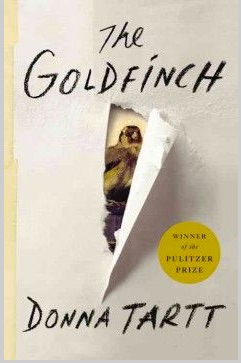
I just realized it’s Friday. I really thought it was still Thursday, but everyone was wishing a happy weekend so I had to check my computer date and, of course, it is Friday. Again. I can’t imagine what happens to the days, where they go so fast, how little I seem to be getting done, and how perfect the weather is for just snuggling in bed with a good book! Speaking of good books, what good books have you read lately? You already know my preference tends to light, fast-paced reading, so adventures, mystery and detective/spy stories, fantasy, and science fiction. When I am in the mood, though, I will read history, a lot of historical fiction, biographies, and autobiographies. When I can get my hand on them, I will read prize-winning books, and I decided to do just that when I went to a literary trivia contest with a bunch of writer friends and we won first place (woohoo!), which gave us first choice of a varied selection of books donated by Indigo. I picked the Pulitzer Prize-winning book The Goldfinch by Donna Tartt. That was several months ago. I finally decided to read it the goldfinch coverand am about three-quarters of the way done. I’m not going to present a summary here—you’ll have to read it yourself to find out the story. What I am going to say, is that one thing that came to my mind when I finally put it down a couple of nights ago (because I always read at bedtime), was Charles Dickens’s David Copperfield. The parallelisms are definitely there: Both Theo Decker and David Copperfield launched themselves into the world at the death of the mother; both boys had to live in different places, not all of them welcoming; both had a little girl they adored; both are significantly affected and influenced by another young boy who is not necessarily the best influence in their lives. I can’t really say more because I’m still not too far past halfway through. Nonetheless, Theo’s journey takes him places the way David’s has, through New York and Las Vegas painted with as much careful and colourful detail by Tartt as Dickens did the England of his times. Tartt’s attention to detail and vivid descriptions, plus the care with which she develops her characters are certainly reason enough for the book to win the Pulitzer. And that’s just the language and writing style. One must appreciate the underlying themes and the way her plot unfolds, as well, but which I’m not going to delve into right now. I’m pretty certain the complex plot, struggling characters, and attention to detail Tartt has woven into this story are why NY Times book reviewer Michiko Kakutani has called The Goldfinch a Dickensian novel. I can’t wait till bedtime.

###

The Trouble with Writing

3

Every writer I know has trouble writing.

                                         ~Joseph Heller

Why do writers have trouble writing? Let’s face it. Writing isn’t easy. Except, maybe, for my friend Patti Larsen, who won the 2014 World’s Best  Story Award and churns out about 17 novels a year. Writing requires great skill, a wide vocabulary, an unlimited imagination, and infinite patience and perseverance, not to mention guts. Writers who start out with lots of talent and nothing else don’t get very far, I imagine. They might be the one-book-wonder who disappears into quiet obscurity because they never completed another book. It really isn’t just skill in constructing great sentences and paragraphs, but skill as well in putting those together into a masterful story; the skill of organization, which helps you keep all your ideas in order and helps you develop your story in a logical manner–that is logical at least to you; the skill of observation, which provides you with an unlimited source of ideas and details that bring your writing alive. We’re already familiar with the patience and perseverance it takes to write and revise until a book is ready for publication; it takes infinite patience and perseverance to get the book out and published, and even more to get publicity and marketing up to decent levels so that you can truly say that your career is writing, and it’s not just a hobby or something you do on the side while you’re working at another job that will pay the bills until you make that bestseller or award-winner. Even before the publication stage, writers need to have the courage–the guts–and the density to push your writing out there and at the mercy of public who either love your work,  tear it apart, or ignore it. In fact, I might prefer that they tear it apart, because from a marketing point of view, that would still sell books, and controversy generates interest; whereas a cool reception would not sell a single copy. All that exposure is tied to the fragile, introverted personality the majority of writers have, so it really makes it more difficult to dangle your work out there.