Evangeline: The World Premiere of a World-Class Musical

1

                  I was in 5th grade when I first encountered the poem Evangeline by Henry Wadsworth Longfellow, who was already one of my favourite poets, because of another popular poem he had written, “The Song of Hiawatha.” Back then, I thought nothing of the significance of the poem, living on the other side of the world where anything about the West was almost a fairy tale. When I learned that the poem had been turned into a musical play, I just knew I had to see it and, in the meantime, refreshed my memory by digging up an old copy of the poem. Ted Dykstra did not disappoint with his well-woven script and amazing songs and music that ranged from spine-tingling spiritual choruses and deeply moving duets for Evangeline and Gabriel, to lively and rousing chorus numbers that had the house tapping and bobbing their heads in accompaniment. Under the masterful direction of Anne Allan, Dykstra’s script was transformed into a powerful performance that deserves Dora Mavor Moore Awards across several categories.


The musical Evangeline closely follows the story of Longfellow’s poem with a few artistic liberties, mainly the addition of the antagonist Captain Hampson, played by Rejean Cournoyer, a re-ordering of Evangeline’s stay with the Quakers, and letting Baptiste Leblanc, played by David Cotton, accompany Evangeline on her search for Gabriel, rather than his father, Basil, played by Tim Koetting, who did not remarry either in the poem. The character of Albert Arsenault’s Rene Leblanc in the musical is a merging of the poem’s notary public and story-teller, and the town fiddler, Michael. Evangeline’s encounter with the Creoles in Atchafalaya was represented by the character of Claiborne, played by the marvelous voiced Marcus Nance.  Nonetheless, the changes created the perfect mix for the musical by enhancing the roles of the supporting characters in the poem.


The title role of Evangeline Bellefontaine was beautifully executed with passion and strength by Chilina Kennedy, while Adam Brazier as Gabriel Lajeunesse, complemented her with his character’s devotion and undying love for Evangeline. Sandy Winsby played Evangeline’s devoted father Benedict Bellefontaine, while Olivier Leblanc, played as a boy by Nathaniel Ing and as a young man by Louie Rossetti, is an invented character who plays a foil for Gabriel and does what Gabriel’s more reserved and restrained character cannot do. The full cast and crew have been assembled from all over Canada, with several well-known names from around PEI. The choreography was simple and appropriate, although one of the female dancers lost her stride and danced to a different beat in the opening scene. The audio was extremely well-balanced, except for a few times speaking or singing volumes rose suddenly because of character proximity, but the balance was quickly and masterfully restored.


The meticulous detail with which costumes and sets have been designed by Patrick Clark is highly commendable as was the execution of the remarkably flexible sets. One thing that makes this production still more astounding is Jamie Nesbitt’s cycloramic video backdrop, which executes a panoramic view that translates Longfellow’s descriptions of the landscape and events into graphic depictions that emphasize the milieu of this story of a woman’s undying love and her strength, courage and determination to overcome all odds to be reunited with her husband.


Without doubt, this brand new musical that depicts the resilient spirit of Canadians in general, and Acadians and women in particular, will be welcomed with much applause wherever it is performed in Canada and around the world.


-30-

 *This review is also available on ONRPEI.ca

**Evangeline formally opened at the Confederation Centre of the Arts Homburg Theatre, Charlottetown, PE on July 6, 2013 as part of the Charlottetown Festival 2013.


When Love is All You Need (movie review)

0

                  Because I’m not a big fan of sentimental and mushy love stories, I’ll have to admit the actual reason that convinced me to watch a movie with the tell-tale title Love is All You Need was Pierce Brosnan. I was pleasantly surprised to find that it was not your usual sentimental rehashed mush. Au contraire.

                  This is the story of Ida, a Danish hairdresser who has just finished chemotherapy treatments but is not sure she is in complete remission. She finds out her husband Leif, who both their children think is one big jerk, has been cheating on her with his accountant and neither of them are hiding the fact. Meanwhile, her daughter Astrid is about to be married to Patrick, the impetuous and confused son of fruit and vegetable trade magnate, the widower Philip. They all meet in Italy, where only family and close friends are invited to the ceremony. Philip’s family includes his boisterous and pushy sister-in-law, who has her own designs on Philip, believing he has always loved her and not her sister. Amidst the awkwardness of the situation and all the mishaps that occur, the characters come to realize many things, the most important of which are whether or not they really love, and whom they really love.

It is not a complex story. In fact, it is poignant in its simplicity. Sure, it’s a twist on poor-girl-meets-rich-boy romance, but the characters are so real, each with his or her foibles and quirks, each with fears and insecurities that they need to face. The roles are well acted, never going overboard, never boring, never flat. The script by Anders Thomas Jensen is witty, funny, and real. Susanne Bier’s directing is marvelous and there are several picture-perfect postcard moments that remind us how beautiful the world is, how lovely humans are, how love is all the more beautiful when it is gentle, quiet, and kind, and how love is all you really need to get by and overcome all difficulties.

Danish actress Trine Dyrholm as Ida and Pierce Brosnan as Philip have such wonderful chemistry together, and the supporting cast with Kim Bodnia as Ida’s errant husband Leif, Paprika Steen as Philip’s sister-in-law, Molly Blixt Egelind as Astrid, and Sebastian Jessen as Patrick make a wonderful ensemble. I would definitely see this film again—and not just for Pierce Brosnan.

-30-

Don’t be an amateur: be a true professional (1)

0

I am a reviewer–a critic, if you will, and I do it because I enjoy many things that there could be so much to write about. What things? Performances, movies, eating out, and reading books.

In the many years that I have also been a mentor and teacher, one of the things I have tried to instill in my students is a sense of professionalism, because that is a very important lesson that, sadly, too many people never learn.

You might say: “I’m definitely a professional because it’s my whole career, I studied about it for several years, I’ve been doing it for several years, and I get paid a lot for it.” Believe me, you don’t need to earn money doing something to be a professional. In fact, many people who earn money (lots of it, at that) doing something are more amateur than they know or would care to admit.

So what are the things that distinguish professionals from amateurs? This new series of articles will distinguish professionals from amateurs according to several qualities–criteria, if you will.

1. Quality. A true professional will always do their utmost best at whatever job is given to them, no matter what the situation. Whether it is a paid performance or a free performance, the true professional will plan carefully, prepare as much as is possible within the given time, and deliver a performance worthy of top awards. Amateurs, on the other hand, are those who do just enough so that whatever they delivery is just good enough, just passable. They usually don’t put their whole heart and soul into what they are doing and hardly break a sweat when they do things.  They don’t go out of their way to plan extensively, study to improve their technique or style, yet expect accolades for their performance or delivery.

This is what I have always told my students when they do something: Always do your best. Do the best you can all the time, regardless of the situation.

If you don’t you are short-selling not only your clients, your customers, your audience, your readers–you are short-selling yourself because you will never learn what it is like to be the best you can be. More than cheating others of the excellent product or performance that they deserve, you are cheating yourself because you are not maximizing your potential. Anyone who does not always do their best consistently is not worthy to be called a professional. Those people are just amateurs, their product always just okay. No big awards for them here, no stars.

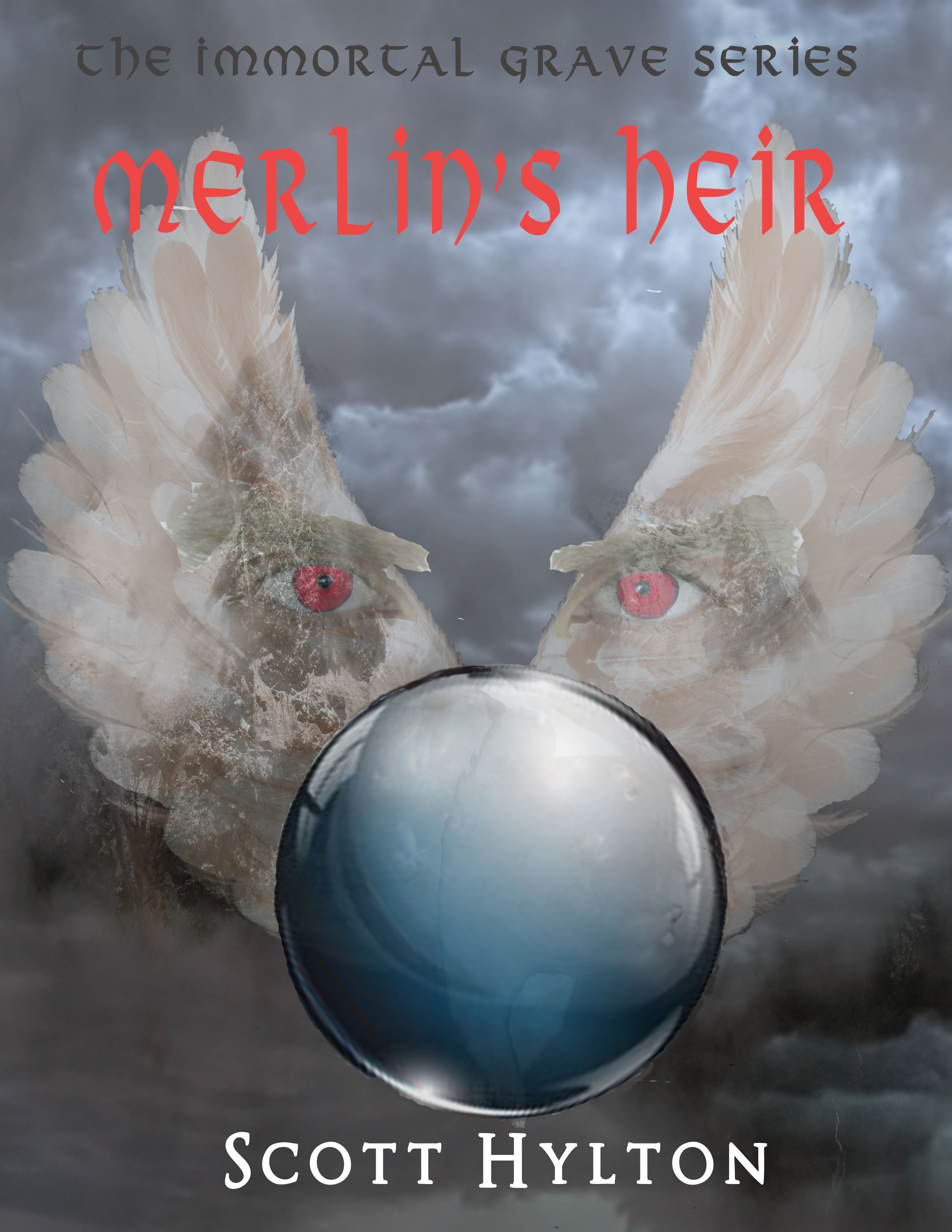
Merlin’s Heir Cover Design

0

I designed this book cover for a friend!


merlin's heir cover

Free copy of 101 Fun Games, Activities, & Projects for English Classes, Volume 2

0
thanks to everyone who supported my by downloading a copy of vol. 2 of my series! i really appreciate you all for helping me! watch for my next giveaway!


Hey everyone! You still have two more days (until July 3) to download your FREE copy of Volume 2 of my series, 101 Fun Games, Activities, and Projects for English Teachers. Even if you won’t use it, please help me get my ratings up by just downloading it here:

Canada: link to Amazon.ca

US: link to Amazon.com 

UK: link to Amazon.co.uk

Cindy’s Rules for Writers #8

0

Rule #8

Rest before editing a long or complex written work. When you finish writing, set it aside. After a day or two, read it again. This is a good time to check for spelling and punctuation errors. Once that task is done, set it aside and work on other projects for about a week or two, at least. This time, read it for sentence structure, word usage, consistency and other grammatical problems. Work on correcting those then leave your work. After another week or two, read it for style and flow, and improve on those. Once you are done, you might select a few trusted and capable friends to read your work for you. “Capable” is very important here because you want someone with a keen eye for details, a good grasp of language, and familiarity with good literature. Listen to comments and suggestions objectively. Don’t argue any points with them, rather, ask for clarification if you wish. If you argue with them, you might put them off and they will not be willing to read for you any more. Instead, check your work and see if you agree with their comments and suggestions. If you do, make the changes. If you don’t, you can either ignore those suggestions or get a second opinion. Or,you can simply use the suggestions to guide you in making changes the way you want.

Not all writers will need to go through this process over several weeks or even months, but if you are new to writing complex works, it might be best to follow this editing and revising process. As you become more skilled as a writer, your style will develop and your work will flow smoothly. Nevertheless, you will still want to consult a reader, proofreader, or editor if you know you have certain weaknesses, such as seeing your own mistakes.

101 Fun Games, Activities, and Projects for English Classes, vol. 2 free giveaway!

1

To everyone who downloaded a free copy of my Volume 1, THANK YOU SO MUCH for your support! Watch for my next free giveaway copy: Volume 2 through Canada Day weekend! June 29-July 3! Pass the word and get a free Kindle copy here!

Amazon.com link

Amazon.ca link

Amazon.co.uk link


Cindy’s Rules for Writers #7

0

Rule #7

Don’t worry about mechanics at the start. If you worry about the mechanics or technical aspects of writing from the onset, you will most likely get bogged down and lose your trend of thought. What are the mechanics you shouldn’t worry about at the start? Spelling, punctuation, usage, sentence structure, and typographical errors. These are things that you can always go back to after you’ve put all your ideas down on the page. Many famous writers owe their editors for the polish and cleanness of their works. I even have it on good word that some popular writers can’t spell very well! What is important is to get the ideas written. Your ideas are what make your work original and interesting. Remember first and foremost that you are a writer and not a proofreader or an editor.

Cindy’s Rules for Writers #6

0

Rule #6

Compare. Pick any one thing to write about and make as many comparisons as you can. This is good for helping you to develop original metaphors that you can later use to create extended metaphors. It doesn’t matter if you start with a few cliches, because once you get those out of the way, you will have to start thinking of new ways of comparing things. If you have a hard time starting, start with obvious things, then move on to the less obvious. It’s okay to stretch the comparison. You’ll be stretching your imagination as well!

Cindy’s Rules for Writers #5

0

Rule #5

Imitate. One of the best ways to learn how to do something is to imitate someone who does it well. There are so many great writers out there to imitate and emulate. Get some poems you like then write your own version. Read a short story and write your own version. Replace the details in your model with details that you are familiar with. Remember, however, that imitation is not copying someone’s work, changing a couple of words or names here and there, and passing it off as your own. That’s plagiarism and you don’t want to get caught doing that. One of my favourite imitation exercises is getting the witches’ brew rhyme from Shakespeare’s Macbeth then letting students think of someone they would like to create a potion for, whether a love potion or a curse, then write it. Try it. It’s fun.