On a quotation by Arthur Schopenhauer…

0

I would say with greater confidence that he who is cruel cannot be a good man. It does not matter who or what the object of that cruelty is. Goodness of character certainly displays itself in the ability to be kind and connected with ALL beings, ALL living things, and ALL things. To neglect any aspect of one’s environs, whether living or not, shows a lack of respect, consideration, and responsibility.

From this poster circulating in Facebook:

1520822_283651201789716_415585656_n

My 2013 ArtSmarts experience

0

For the first time, I had the opportunity to join Culture PEI’s ArtSmarts program, and I must say it was an experience to remember!

This year, the program was organized in collaboration with the PEI Association for Newcomers and Sandy Macaulay’s Project-Based Learning class of pre-service B.Ed. students to fulfill the theme “Celebrating Diversity: Exploring Culture, Language, Identity and Global Citizenship.”

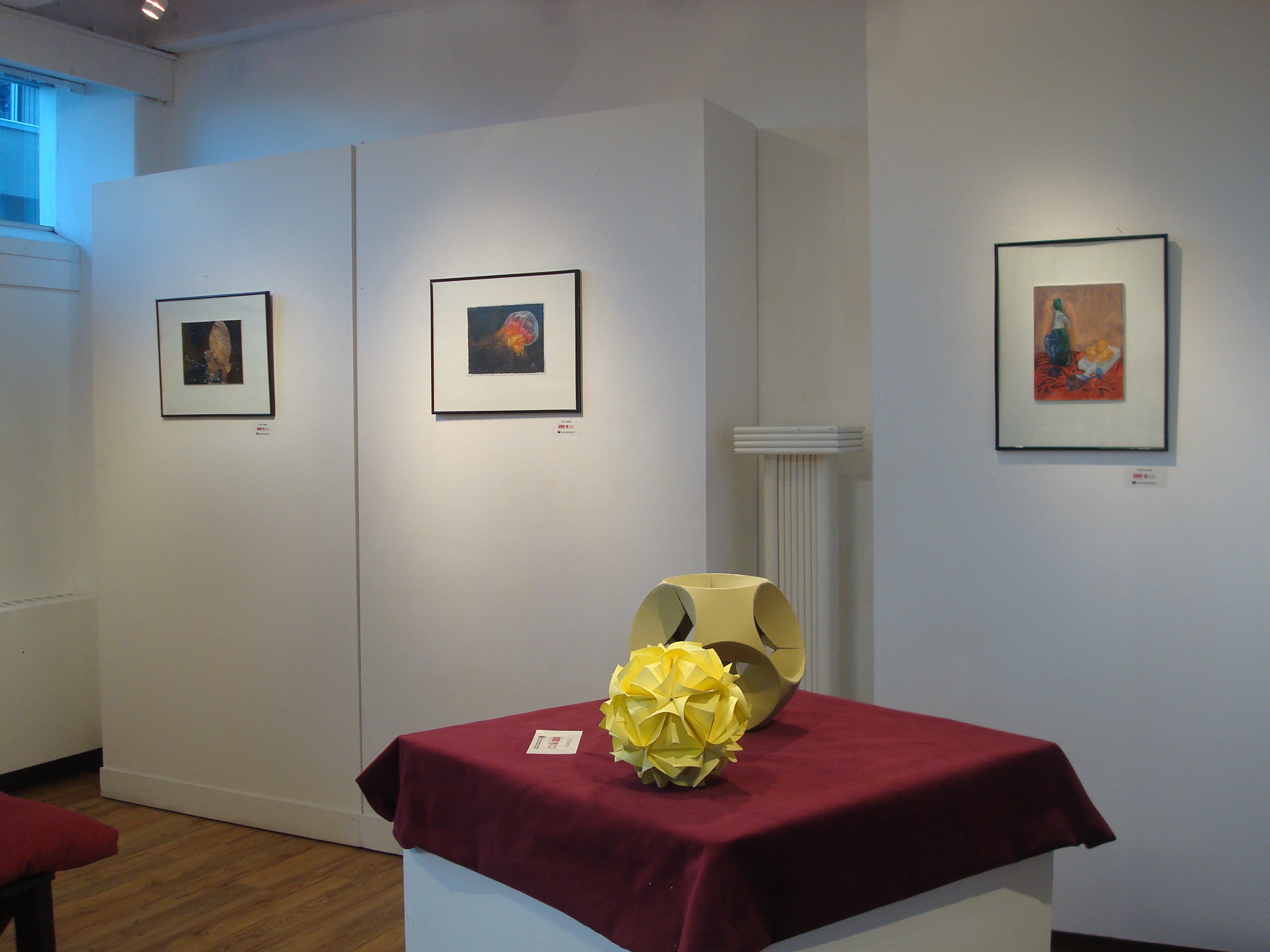
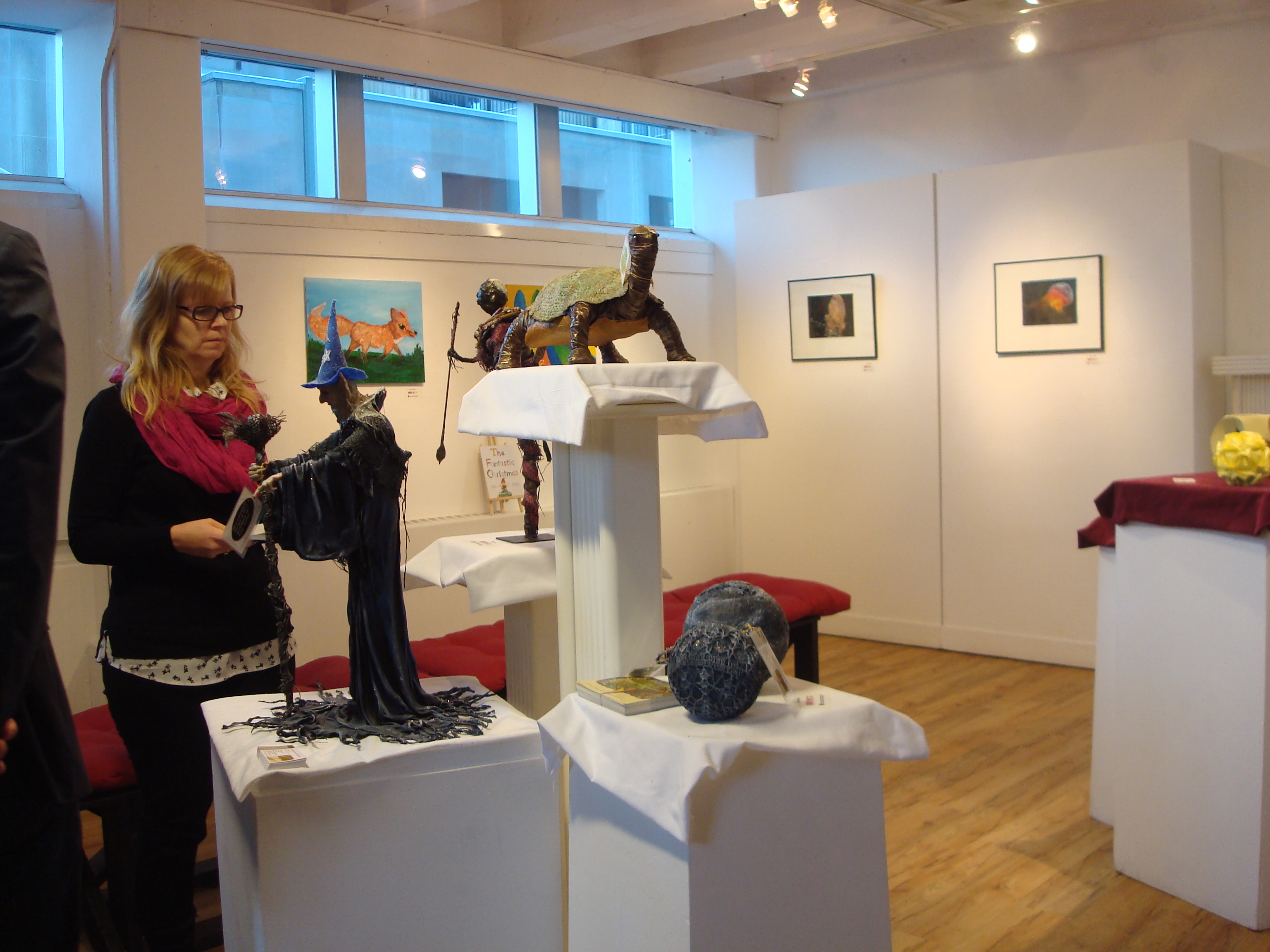
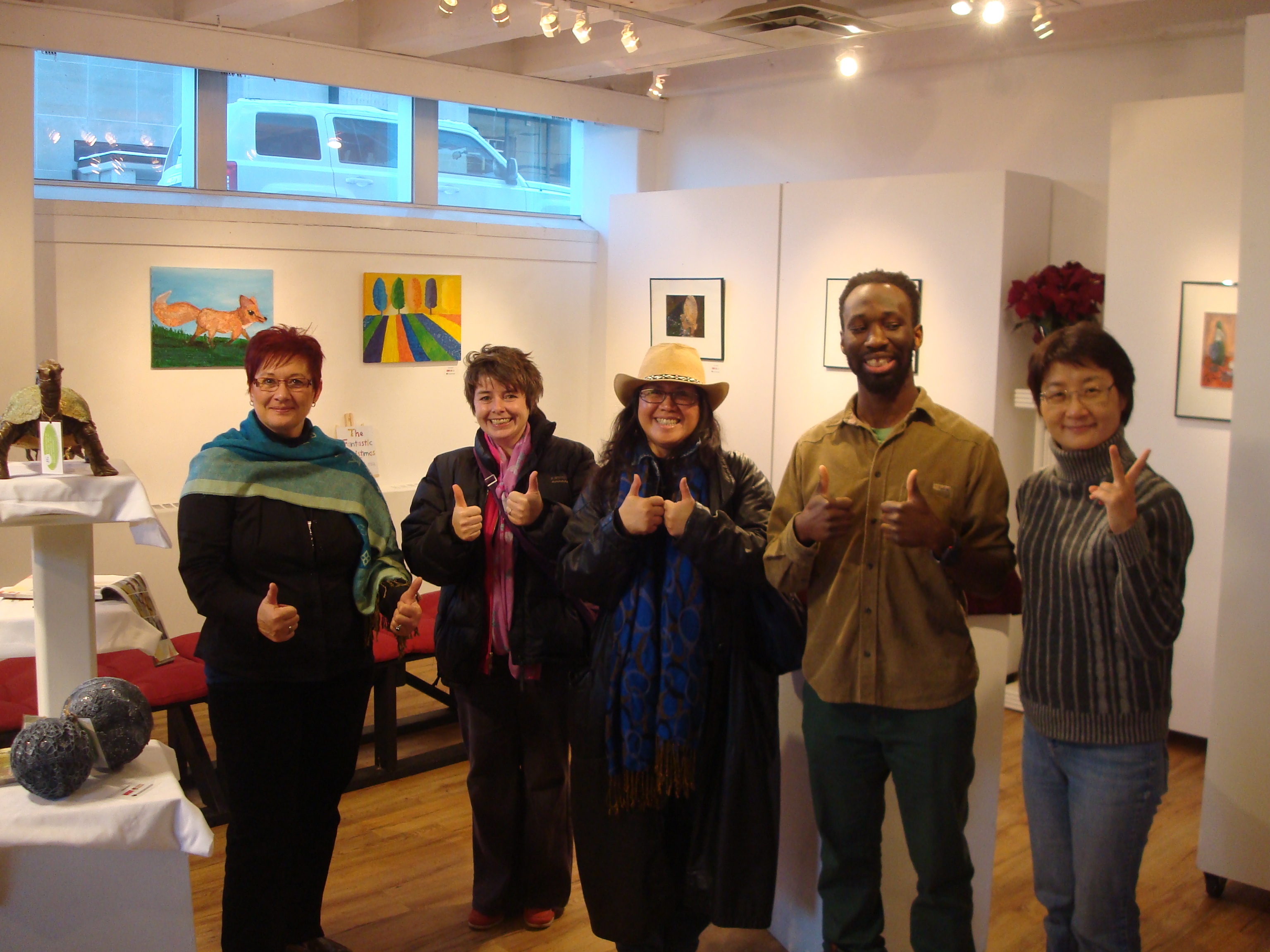
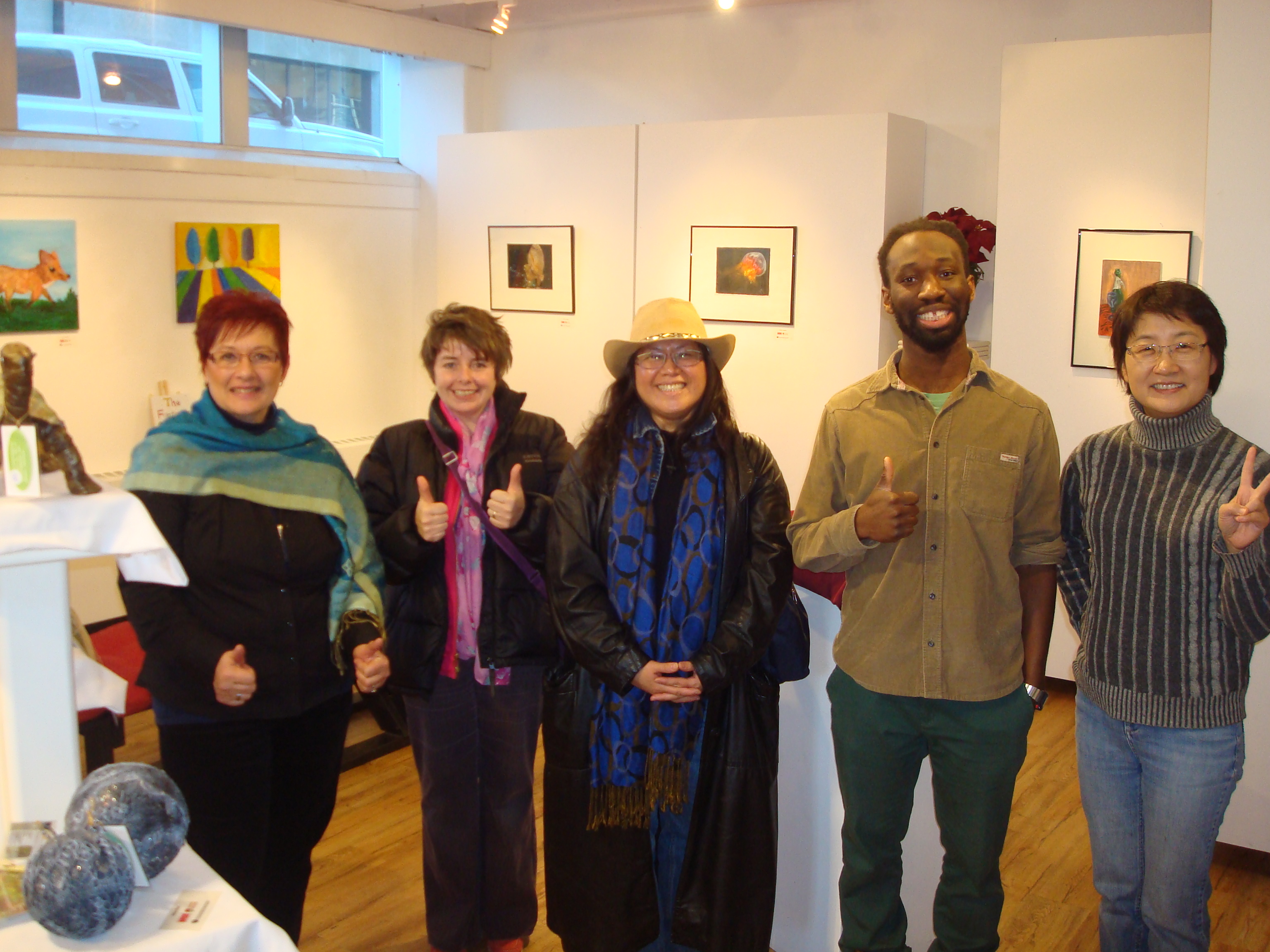
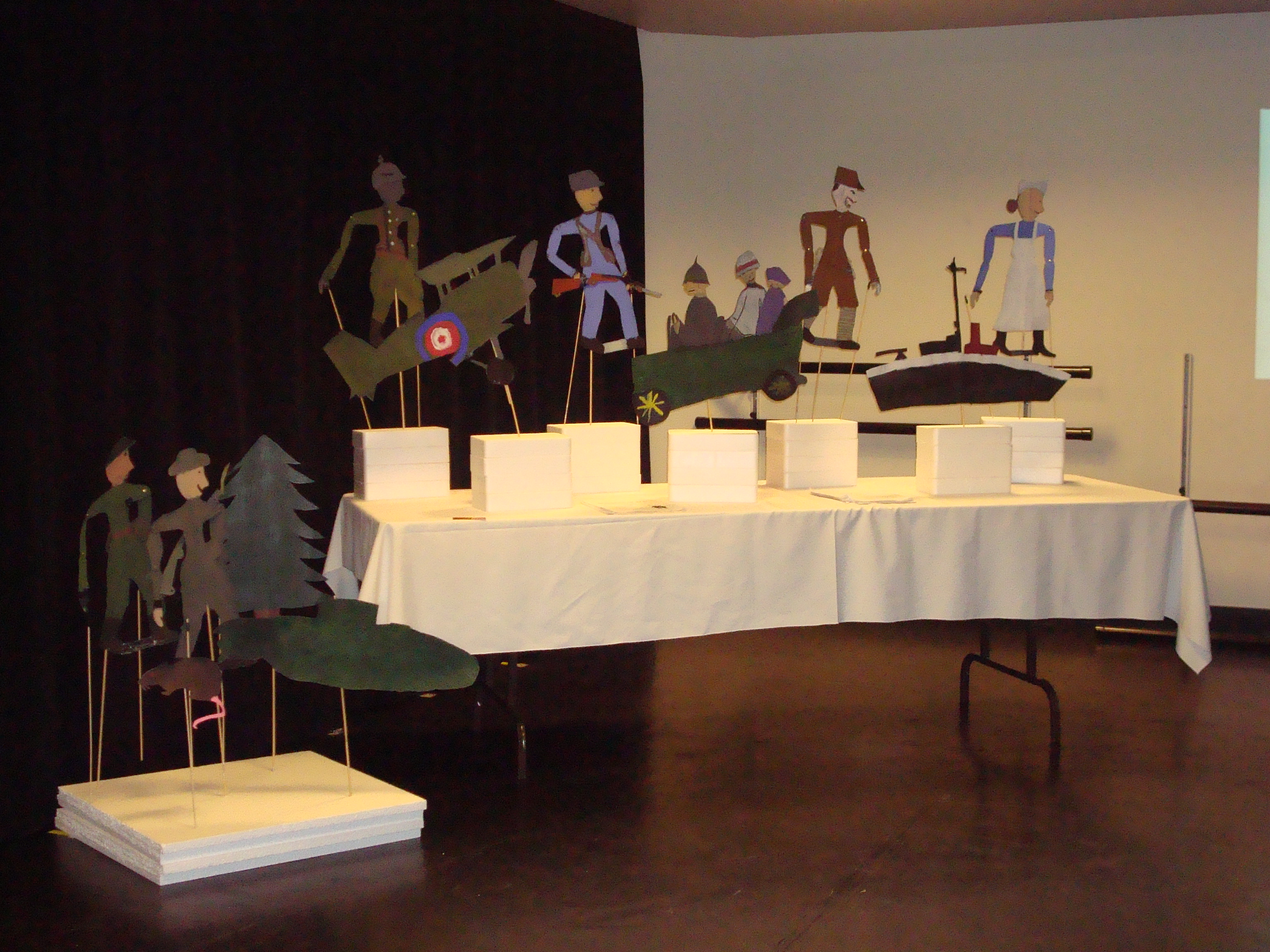
 I was lucky to be matched with pre-service teacher Robyn Christensen and Todd James, 7th grade Social Studies teacher at Birchwood Intermediate School, to work on a project that would be displayed at the Confederation Centre for the Arts on the 11th of December.
The first month, from mid-October to mid-November, was spent planning with Robyn. Todd had given her free reign over tackling the chapter on World War I. Originally, we began planning a performance that would be a combination of narratives and acting, more in the spirit of mime, but pretty much a “silent film news reel” type of performance so the students would not need memorize anything, considering how little time there was.
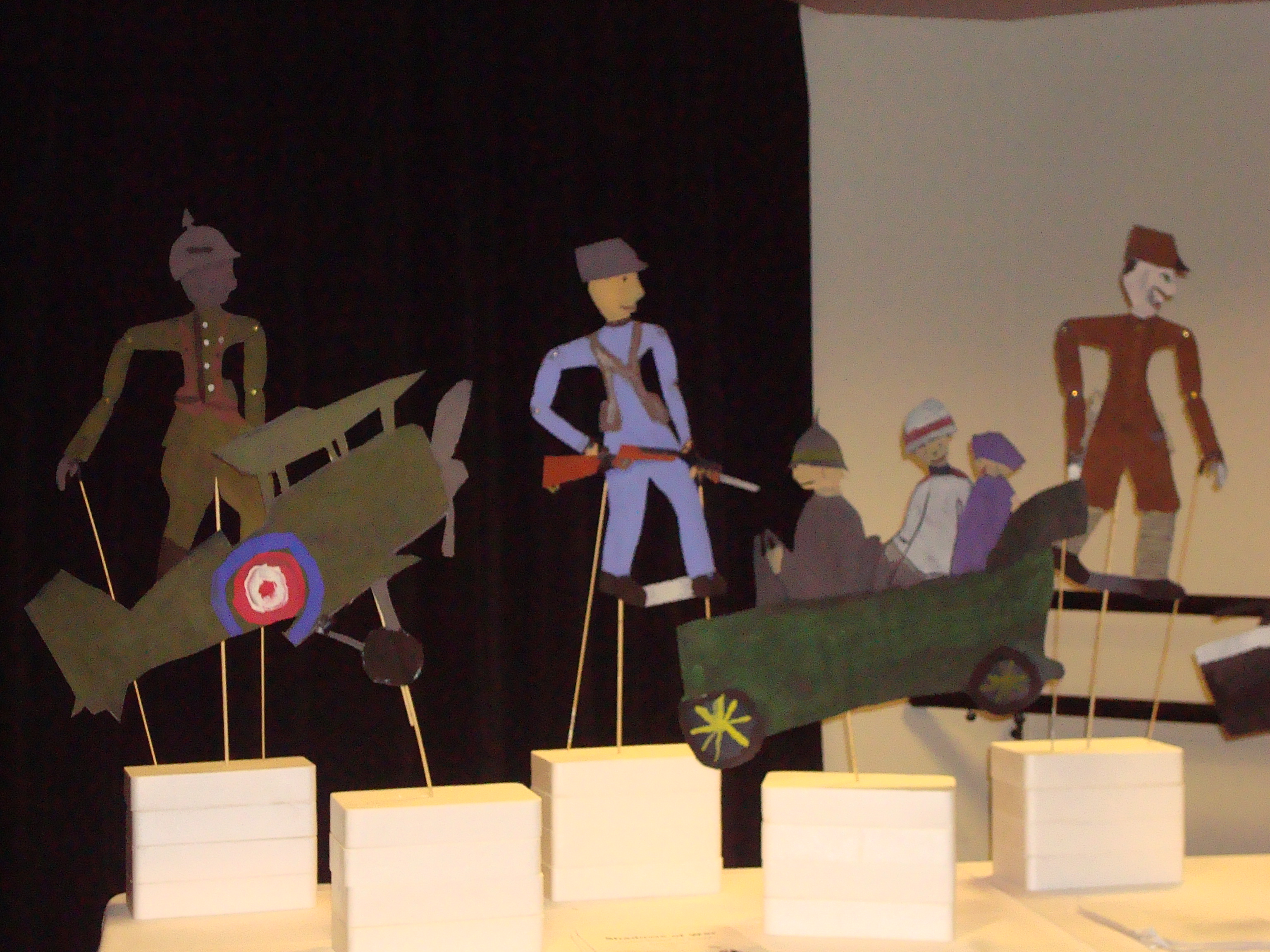
At our second meeting, Cecile Arsenault, who was then in charge of the ArtSmarts program, reminded us of the “diversity” aspect. Robyn and I agreed that the students would interpret the War from the points of view of the different nations involved. The prospect of creating a full production was daunting, so I suggested we use Asian shadow puppets, called Wayang Kulit, to introduce a new art form to the students. Robyn was reluctant at first, but warmed up to it when Cecile and Sandy both thought the idea was exciting. At our last planning meeting, Robyn constructed a shadow puppet from a model I had made, and from then on, she was completely hooked.
We decided that, to simplify the construction of puppets, that I would create the templates for the students to cut out and assemble, which they did in one hour. We spent another hour painting the puppets. Then, we took a whole afternoon to piece together the whole performance.
That afternoon was pure chaos. Needless to say, we did not finish blocking the performance and the students were all over the art room, where we were rehearsing. At the end of the day, Robyn decided we should just record the puppet show on video. I suggested that we might as well dub it with the sound effects and the students voices, so that I could continue directing even as we recorded each scene of the puppet show. I did a quick rewrite and blocking of the script over the weekend in preparation for our Monday afternoon recording session. We took the whole afternoon and completed 13 of 20 scenes. Then, we took the whole morning of Tuesday and finished the last 7 scenes. Robyn did the editing and dubbing and we spent all day of Wednesday at the Confederation Centre showing off the students’ work–puppets and puppet show–to all comers.
I must say that 5 meetings of putting a 15-minute puppet show all together, from making the puppets to staging the show, was a HUGE accomplishment for 7th graders! Everything they did was amazing. Understandably, the process of recording, which took 3 half days, proved taxing for everyone, considering these were 11- and 12-year-olds we were working with.
I have suggested that more time be allocated to interaction between the artist and the students, especially in junior high. Our biggest disadvantage was that we had short isolated sessions sprinkled throughout the week, only 2 of which were full hours, the rest just half hours. All told, I had 6 scheduled meets with the students, but had to take over 3 half days just to finalize the project. If we could have collaborated with more classes or, ideally, with all the teachers of the class we were working with, and a full quarter with 2 or 3 whole days a week dedicated to the art project, then it would be an amazing integration of all subject matter into a single art project!
The only sad note was that our class did not get to see their own puppet show at the Confederation Centre. Neither did they get a chance to visit the Gallery@The Guild to see the artists’ works on display. One of the reasons the Arts Council mounted the artists’ exhibit was so that the students would get a chance to see works by the artists they were working with.
All that aside, I will definitely want to participate in the ArtSmarts program, every single year, if possible!
2013-12-11 11.32.31 2013-12-11 11.32.46 2013-12-11 14.52.11 2013-12-11 14.52.19 2013-12-11 16.09.26 2013-12-11 16.09.41 2013-12-11 16.09.57 2013-12-11 16.10.09

Black Friday and other madness

0

I just don’t see why anyone in their right mind  would camp outside a store all night to shop in a frenzied environment with people grabbing, pushing, and acting like they would die if they didn’t get that last sale item on the shelf. The suffering, hardship, and trouble they put themselves through is completely senseless. Not to mention the money spent, usually on things they don’t really need, that would be so much better spent if it were donated to people in need all over the world.

Does anybody really need all those things that businesses try to unload on us during these megasales? All it does is engender more crass commercialism, morbid materialism, and unbridled greed. Most of the time, these businesses just want to get rid of merchandise to make room for more new merchandise. Shame on them for even thinking up these insane inane events. They’ve already made their profit, this is all icing on the cake. They sell with “take it or leave it” and “no return no exchange” policies so whatever you get, you’re stuck with. Sometimes, you don’t even really use what you get. You get it just because it was such a good bargain you can’t pass it up. But if you didn’t need it in the first place, it might just sit in your basement or attic or garage or closet forever. In which case, it’s money wasted.

What if big businesses unloaded all that surplus merchandise on people and countries that really needed it? It’s called DONATING. So many people around the world have lost their homes and everything in them to natural disasters. So many people around the world don’t have clothes or shoes. So many people around the world don’t have food to eat or clean water to drink. So many people around the world don’t have a house of their own. It’s a shocking imbalance of wealth and those who throw away their money on more of things they already own have their priorities seriously scrambled. They need a big knock on the head. A really big one that will knock some sense into them and stop this madness.

Remembrance Day

0

I wrote this piece before Remembrance day but forgot to post it here. Still, the sentiment hasn’t changed.

Remembrance Day is just a couple of days away and once again, Canadians will visit their War Memorials to pay their respects to those who fought and died for peace and freedom. It’s just ironic that to achieve peace, governments find the need to wage war. What is more ironic is that, while we honour those who fought and died as soldiers, we forget those who stayed home to keep things running, those who sat silently and patiently waiting for their loved ones to return, those who humbly accepted folded flags in exchange for their loved ones’ lives, those who live on with nowhere to run, no one to turn to, no help from a government that is more concerned with what it can gain for itself than what it can give to its people. Is it because those who are living aren’t crying out loud enough that the government pays no attention? Where are the PEACE, ORDER, and GOOD GOVERNMENT that our motto promises? Our government, on all levels, puts to waste the sacrifices made by our Veterans and their families, the sacrifices made by all families during the wars that have been and the wars that are. The government celebrates them one day out of every year but throws dirt over their stones the rest of the year. One day, we will see only the dirt that besmirches the memorials, staining them worse than the spilled blood that stained the fields of war.


The Lost Amulets: Factoid

0


What are amulets?

Amulet – from the Latin amuletum, literally, something that offers protection, and can be found in any form–from gems to statues, to even plants and animals.

Purists might argue that the amulets in The Lost Amulets are more of talismans (bring luck, benefits, and protection). As a matter of fact, the amulets in my book offer the greatest form of protection–not only for the owner, but for specific things in nature. Admittedly, I did not expound on the protective aspects of the amulets in my book and will be revealing more about them in the next book, The Amulet of Fire.

In The Lost Amulets, the third object, the spear of Anlabban, is a magical spear, a talisman that offers protection as well, rather than an amulet. I have to admit that the Amulet of the Tides also behaves rather more like a talisman. But then, I am not a purist–I’m a FANTASY FICTION writer!

The Angel in My Arms

0

My firstborn son, Kitt, was barely a month old and I was still recovering from a Caesarian section that, I suspect, was not really necessary had I been allowed to give birth in the same hospital where I was born, where my OB-Gyn was. Instead, I was checked into a provincial hospital where the local OB-Gyn claimed the baby was in fetal distress and the umbilical cord was looped around his neck. She did an emergency classical C-section without any consultation from me, something my doctor in Manila would never have done.  Nonetheless, Kitt was born a healthy and bouncing baby boy and we went home together after 5 days.

His father–my first husband–and I, had been sufficiently warned against attempting anything that might get me pregnant again, and were told to wait at least a year to make sure my uterus was completely healed and strong enough to sustain another pregnancy. I knew how risky it would be and how I could possibly bleed to death should a pregnancy too soon rupture the weak muscles. His father thought otherwise and, completely against my wishes and ignoring the doctor’s warnings, forced himself on me. I was so angry and feeling completely betrayed and violated. Compounded by post-partum depression which got worse after that, I tried unsuccessfully to hurt myself very badly just before Christmas, and again on New Year’s Eve, when everyone was outside the house celebrating. I hated my husband, hated what he had done, and hated the fact that my period had not returned. I suspected I was pregnant and was desperate. I did not want to be pregnant so soon and hated the fact. Shortly after my birthday in February, I managed to make arrangements to return to Manila, where I really belonged. My then-husband decided to stay with his parents, because his mother insisted that she was the only one who could take care of him whenever he was not well, since, apparently, he was a sickly boy. I was happy and relieved to leave his parents’ home, where living for six months had driven me to desperation as nobody in his family could understand why I did not want to teach in a rural Philippines public school or why I spent so much time reading and writing after I already had a degree, or why I wanted to go back to school to obtain a Master’s degree. They could not understand why I did not want to sit all day in a rice mill, deal with farmers and laborers who needed to get their rice milled, or learn how to tell different kinds of rice or rice quality by sight and feel. They could not understand why I chose to read books and not local serialized comic books in the vernacular. They could not understand why I did not watch soap operas or share in local gossip.

Back in the house where I grew up, my mother became the doting grandma. My parents adored Kitt, who was their first grandchild and first grandson. When my parents found out that I was pregnant, they were outraged, even if they didn’t know the exact circumstances, although they suspected it, because they knew I had better sense than that and I had not denied that I wasn’t a willing party in this conception. Nonetheless, my mother enjoyed her new role as grandma and soon-to-be grandma again, and dressed me (I thought I had escaped that when I left home after high school) and fed me. After six months in provincial rice lands and in-law territory, It was nice and a welcome respite. I was soon offered a teaching job at the high school I had graduated from, by the principal who had known me since I was a student there in our blue jumper-skirt.

I started seeing my OB-Gyne in Arellano Clinic again, where Kitt should have been born. She determined that my second baby would be due in around the first week of November, which was just shy of Kitt’s first birthday, but because it would have to be a repeat C-section since it was way too soon to risk labour. So I picked the 25th of October, a Thursday, the last day of 2nd quarter of the school year, so I would have finished marking exam papers and I would have submitted my grades for student report cards.

Early in the morning of the 25th, around 8 a.m., I was brought to the delivery room, where Dra. Merceditas Villalobos, having to perform a second C-section in exactly the same spot that Kitt had been pulled out of to prevent additional scarring of the uterus, delivered my second child and only girl, whom I named BIANCA MARGARET. She was tiny, wrinkly, pink package at 5 lbs 8 ozs or somewhere thereabouts, actually a few ounces bigger than Kitt when he was born. I was experiencing post-partum depression in a major way and seeing this baby that shouldn’t even have been conceived gave me even more despair as I thought of how difficult it would be to raise and support two babies barely 11 months apart on a teacher’s salary.

She was just barely 10 days old and home for less than a week when I discovered, despite my mother’s reassurances, that she had not been feeding well while I was working on marking exams and writing up grades. She was losing weight instead of gaining any. I asked my mother about it and she happily admitted that Bian had been consuming about an ounce of milk a day. I was appalled that my mother, who was a doctor, thought that an ounce a day was enough and she had not even noticed that Bian had been losing weight and looked almost like a corpse.  Bian looked so pitiable, was alarmingly skinny, and had turned a bluish-gray. Her eyes were sunken and purplish circles lined their undersides. Just seeing her looking that way tore at my insides and I wanted to scream at my mother, yet, at the same time, I wanted to break down, but couldn’t. I was terrified and knew something was terribly wrong. I felt that maybe, I was being punished for not wanting her, but I did not have time to sink into self-pity. Cindy the manager and director kicked in and I rushed her back to the hospital where they discovered that she had contracted septicemia, most likely from her umbilical cord. They tried to find a place to insert an IV but her tiny veins had collapsed from being so dehydrated. Finally, the only place they could insert one was through her head. There was nowhere else they could draw blood samples either, except through her tiny heels, which looked like tiny pink pincushions with tiny purple pinpricks after a while. She was put on a course of antibiotics and we spent the next ten days together in a private room–the needles and tubes and bottles were too many to keep her in the nursery and I would not be able to be with her there 24 hours a day. It was all touch and go for a while and during the night, when no one was around, I would curl myself around her tiny body and cry in silence as I stormed the heavens with tears and murmured prayers. I would whisper to Bian and sing to her, holding her as close as I could without upsetting the tubes all around her. Her father visited twice, during weekends, and took my place on the bed next to her so I had to sleep on the couch. After a whole agonizing week, her color began to change from blue-gray to a pale pink and, on the 10th day, the doctor declared that the infection was gone and we could go home, but she would still need another week of antibiotics, which had to be administered as shots.

At home, my mother redeemed herself by offering to administer the shots, which she did in Bian’s thin thighs–which were still the thickest part of her that a needle could be given. She conscientiously reported to me every ounce of milk that Bian consumed and soon, my little angel was putting on weight.

I was still deep in post-partum depression but could not bear to be in my mother’s house any longer, so she helped me find a tiny rental that was actually a small apartment that had been split so that there were two rooms for rent each upstairs and downstairs, with a shared kitchen and bathroom on each floor. We had a tiny room next to the kitchen on the ground floor, which was just enough for a twin bed and Kitt’s playpen, which was also his crib. We put up two stools and a tiny handkerchief-sized table in the hallway outside our door, and a two-burner stove on the shared kitchen counter. The kitchen itself had a bare concrete floor and a laundry area sat next to the stove and the shared bathroom door. There was just enough space for our small refrigerator, which was necessary to keep the babies’ milk and food chilled, but could hold a week’s worth of food. I had to pay for the apartment out of my meager salary, but the children’s father paid for the nanny-cum-housemaid, whom he had brought with him from the province.

Still miserable, I spent the rest of my maternity leave quietly and the only times I left the room were to bring the babies for their doctor’s checkups and shots. It was sometime around Christmas, exactly two months after Bian was born, when I started resisting my husband and, as a result, he started becoming more physically rough with me. Twice more, I tried to hurt myself very badly, on Christmas eve and again on New Year’s eve, when there was so much noise outside that I hoped no one would notice me, but that only got me more rough treatment.  On New Year’s Day, I looked at Bian and, for the first time, as she wrapped her tiny fingers around mine, she gave me the most beautiful and sweetest smile ever. I broke down crying and, looking at my babies, I decided that I would live for them from then on. My little angel had just walked into my heart and given me a second reason to live.

My little angel is now a grown woman–but she still is, and always will be my angel!
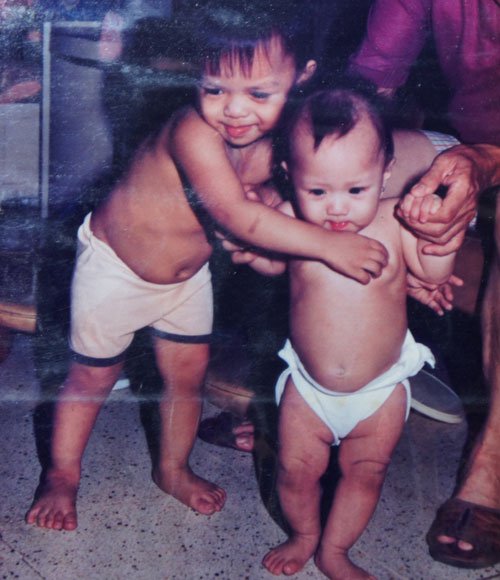
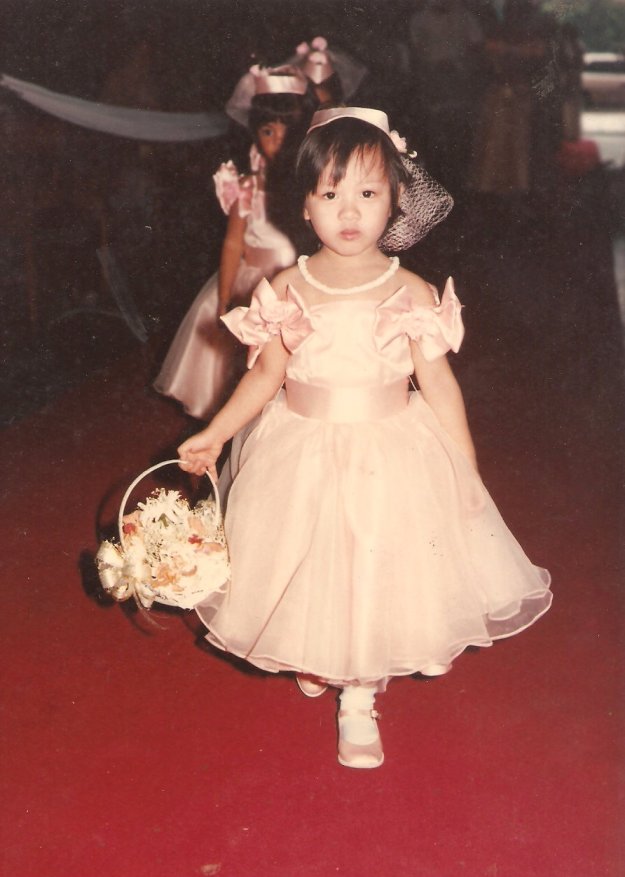
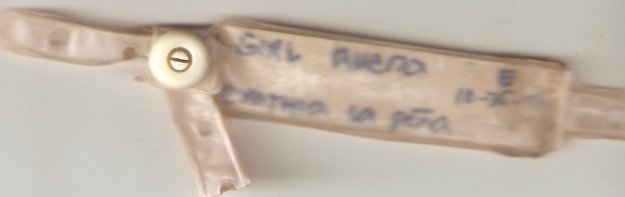
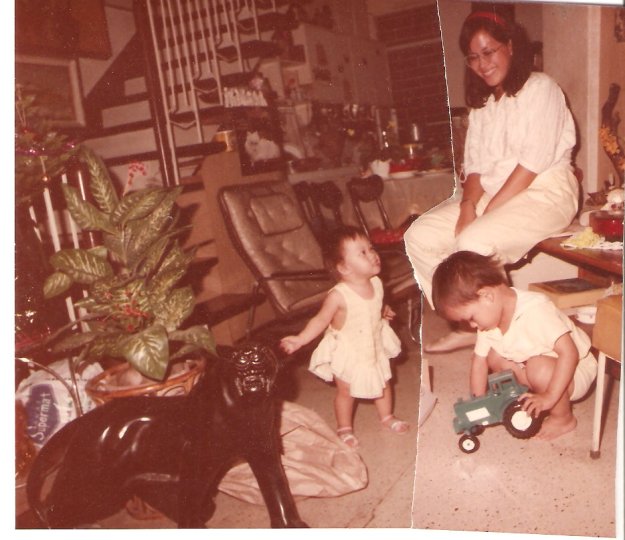
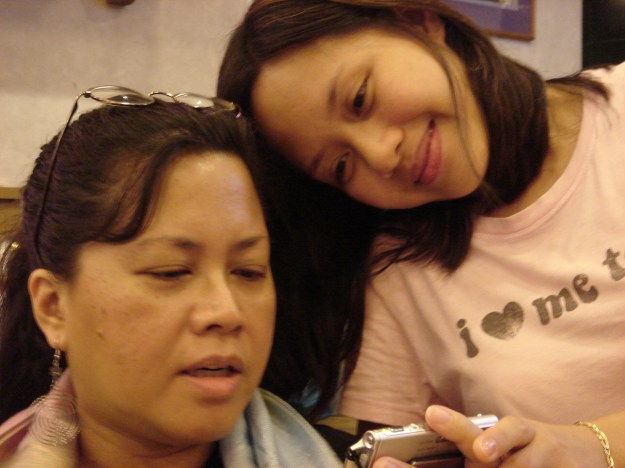
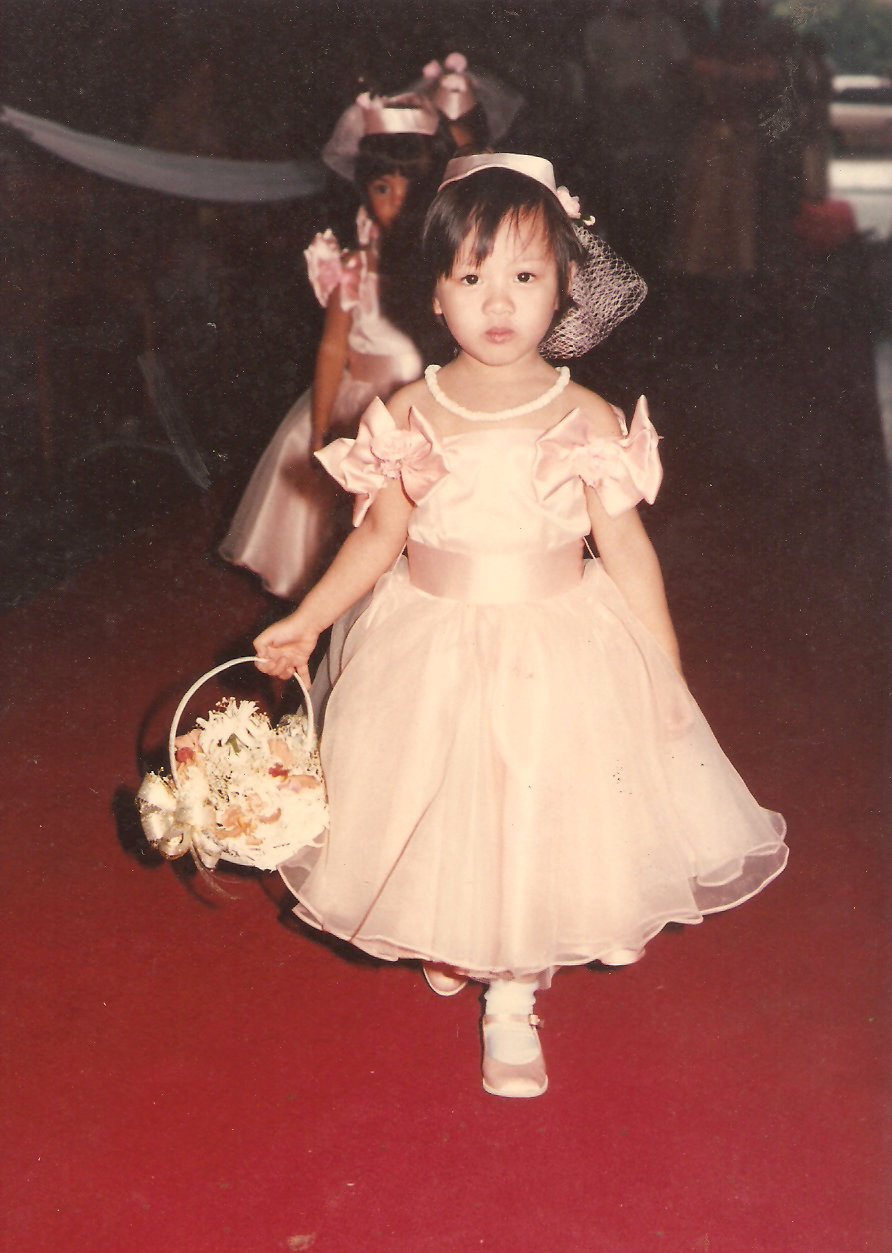
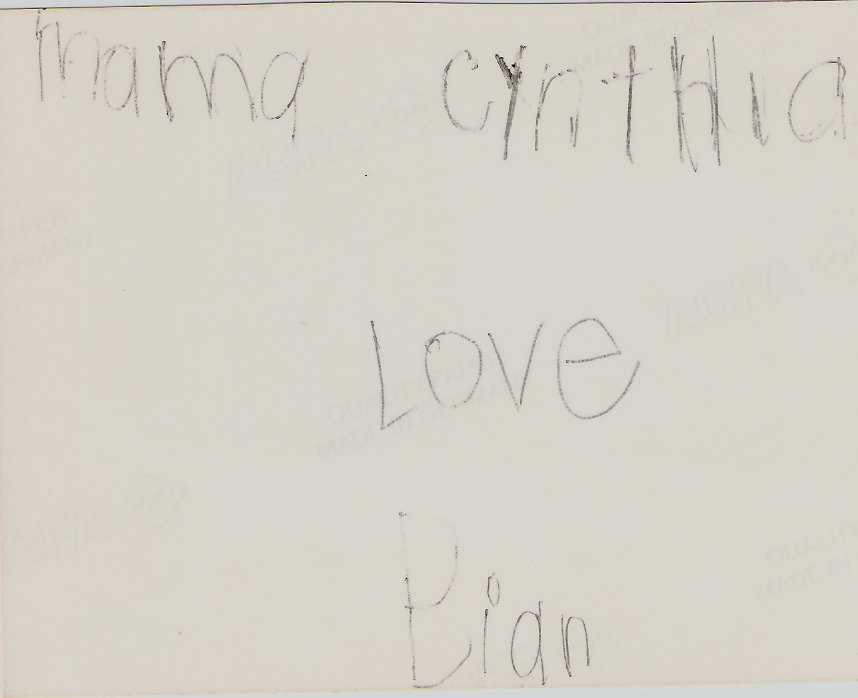
183146_10150151324225660_605310659_8747028_525591_n Bian at Tata Villavert & Claude Corpuz's wedding, May 28, 1988 ScannedImage-29 ScannedImage-37 ScannedImage-62 ScannedImage-63 ScannedImage-75 someone's getting bored too high tech for mom

Life is…

0

When I was a teen, I used to say that life was one big mistake that couldn’t be erased. I even made a poster for it that my high school guidance counselor hung on her door.

I was right about not being able to erase it. I still don’t know how much of a mistake it is–there are certainly so many mistakes that humanity has made throughout its existence and those certainly can’t be erased.

What I have realized is that while my life could be a mistake, as many others might feel about theirs, I was learning from those mistakes. I know so many mistakes were made around me that affected me in so many negative ways. I know I made so many mistakes that have changed my life also in so many ways. But I know that, all my life, I had been seeing mistakes that would make me swear I would never ever do them.

I know now that ever since I could make decisions about things, I have been responsible for making my life what it is. I have been responsible for learning from the mistakes of others as well as from my mistakes. I know now that my life is what I make it and what I make of it.

Life in all its forms, the world included, is so sensitive that every little action makes its mark. Life reacts  by either succumbing to those actions or by overcoming them. Many times, life ends because it succumbs. Most of the time, life goes on because it overcomes. It adapts. It adjusts.

I have made mistakes, goodness knows how many. But I have overcome them. I have adapted. I have adjusted. I still make mistakes. But I have been learning from my past and the past of others around me. I know there will be some mistakes that I will no longer make.

I am on a new path now and that means I will, in all likelihood, make mistakes. But I know that I need to focus on overcoming rather than wallowing in self-pity every time I fall down , which is the easiest path to succumbing and, in some strange way, comforting. I will not wallow in self-pity because I don’t have all the time to indulge in negativism. I need to overcome that tendency and focus on what is needed, on what has to be done, on living my life to its fullest all the time! If that means sitting back and taking a deep breath once in a while, I will do it. If it means asking for help sometimes, I will do it–even if that is one of the hardest things for me to do. If it means drastically changing the way I do some things, I will do it.

I need to remind myself what I often tell my students — the moment you stop learning, you might as well be dead. I’ve been doing it, I just haven’t been paying attention. It’s what I told everyone when I was homeschooling my son — everything in life is a learning opportunity.

It has and always be my guiding principle. Life is Learning. Always.

Cindy’s Rules for Writers

0
1. If you want to be a writer, write! Don’t just think about it. Don’t just talk about it either. Write as much as you can whenever you can. You can’t be called a writer if you’re not writing anything. It doesn’t have to be fancy. It can be words. It can be sentences. Words grow into phrases, phrases into sentences, sentences into paragraphs, paragraphs into stories.

Writing is good for your brain!

0

Don’t just think about something. Write about it. It’s good for the brain.

It doesn’t matter what you write about. It doesn’t matter how good it is.

Just a sentence a day keeps dementia away!

It’s good exercise for your fingers, especially if you type (more fingers are involved).

It’s good practice for grammar. You’ll eventually get those sentences right with practice.

It keeps your vocabulary active.

It makes you think. Thinking stimulates the brain.

It makes you remember things. One memory leads to another.

It brings back memories. Don’t just say something smells nice. Say how nice it smells. Say it’s a faint aroma that wafts in the air and reminds you the gentle fresh scent of a newly bathed baby. It’s the warm, satisfying smell of freshly baked bread just like grandma used to make.

It stimulates your imagination. When was the last time you had a fantasy and wrote about it?

It makes you read. After all, you read what you write, don’t you? And then, you’ll want to read what others have to say about what you write. Then you’ll write some more. It’s a vicious cycle.

It challenges you. If think you have nothing to write about, think again. You can write about not being able to think of something to write. That’s something to write about! When you’re done writing about not being able to write, write about other things. Write about what you like. Write about what you don’t like.

It teaches you to be observant. Write about what you see, hear, feel, taste, smell.

It expands your vocabulary. Look for the exact word to describe something. Don’t just say your desk is cluttered with stuff. Say that it is an endless expanse of treasure and trash that constantly surprises you with objects that you had forgotten you owned. The kiss you got wasn’t just nice. It could have been sloppy and wet, reminding you of your dog licking your face. Or it could have been completely titillating, creating a tingling sensation that travelled from the tip of your toes to the top of your head, and after that you felt like a marshmallow trapped within his tight embrace, warm, fuzzy, and melted like a smore straight out of the oven.

It makes you want to learn more. Every time you learn something new, write about it. Every time you think of something you’d like to learn, read about it. Then write about it. Then go ahead and do it, then write about it again!

It makes you creative. Don’t say the dog ate your homework. Say it blew over the balcony when your mom opened the balcony doors and got caught in the branches of the tall tree in your backyard. Or your father accidentally put it through the paper shredder because he thought it was one of his old files that he was disposing of.

It helps pass the time. If you have nothing else to do, write! If all the people in the world who had time on their hands wrote in their free time, there would never be an idle mind or idle hands. Nobody would be bored. And the whole world would be literate!


I Like Printed Books!

0

I just read an article about print vs. digital textbooks on this blog and pretty much agree with the article, which you can check out here: http://www.onlinedegrees.org/e-textbooks-vs-print-textbooks

<b>Please Include Attribution to OnlineDegrees.org With This Graphic</b> </br><a href=”http://www.onlinedegrees.org/e-textbooks-vs-print-textbooks”><img src=”https://s3.amazonaws.com/infographics/21etextbooks.jpg&#8221; alt=”E-Textbooks Infographic” width=”500″ border=”0″ /></a><br />

While many people I know already download reading material on their tablets and carry around as many as a thousand books with them, I still don’t think I’ll ever give up printed books for several reasons.

I like the feel of a good solid printed book in your hand, and each book has its own feel. Hard bound, soft bound, cloth bound–they all feel different. Inside pages also are different from one book to the next, as are the edges of the pages. I have recently noticed several hard bound books with rough-cut edges which gives them a quaint appearance and feeling and spares you from paper cuts. I love touching the embossed designs on some covers and many covers are worthy of being called art. I love the smell of paper and pages, especially of freshly-pressed books with that crisp, inky new-book smell. Sure, it might be the chemicals in the paper and the ink, but  it still smells good! I love the feeling of flipping the page or sliding my fingers on the top or sides to separate the page I am reading from the next one, ready to turn as soon as I reach the bottom. I love stuffing a large coat pocket with a book and feeling the book through the cloth, knowing that I can read it when I want because pocketbooks were meant to be carried around in pockets. I love having the option to write in the margins or mark my favourite parts, even if I don’t really write on the margins–but I know some people who do. I love collecting bookmarks of all sorts and peppering my books with bookmarks so I can open any one of them and return to a page that, for some reason, a long time ago, I wanted to be able to return to, then realize why I wanted to bookmark that page. I love to grab a book and open it to any page at random and take a peek at what’s on that page. It sometimes makes me want to read the whole book, or reminds me that I have read that book already. I like seeing the whole page at one glance and skipping ahead to the last paragraph on the page or peeking at the facing page to see where the story is leading, or maybe peeking back at the previous page to recall certain details. I can read it without having to spend on upgrades or batteries. I can read books in any light at any angle and I don’t have to worry about magnets of scanners or any other device that might destroy all my book files. I can look at the pictures as closely or as far as I want and still see the whole picture. And the page.

When I study something, I like having my own book, because I do write in the margins of my textbooks. I mark parts and cross-reference them with other parts. I can flip back and forth and then look at two or more pages at the same time, holding the in-between pages straight up. I can put in several bookmarks and skip back and forth or curl the pages and save all the places I want to go back to. I know exactly where to find the table of contents or the index or appendices and if I need to without having to scroll through a page-less text. I like running my fingers across the spines of books on a shelf or in a pile, tilting my head to read titles standing sideways, studying the fonts and the colours.

A book will never hang on me, never run out of batteries, and can be dried with a flat iron. I don’t have to worry about dropping it or smashing it. I don’t have to worry that it will become obsolete. I don’t have to worry about running out of space to add more books because the memory only holds so many books. I don’t have to pay a subscription to anyone and don’t need to worry about not having a credit card to buy something online where only credit cards are accepted.  If I need a replacement, I can get a new edition or a used copy for a very low price. I can open two books at the same time, or three, or ten, which is great when you are researching or studying and have several references that you want to compare. I think of all the people in the world who don’t even have a computer, let alone a tablet, because they can’t afford either. For the price of the cheapest tablet, I could get as many 10 books. Why would I buy the tablet and then pay for downloads of those 10 books on top of it all? I can see my real books and know I have them and just seeing them reminds me that I might want to read another book, or reminds me that I have read so much. Just seeing so many books around me gives me a cozy, comforting feeling, knowing that each book on my shelves is unique in so many ways.

I don’t see myself getting a tablet any time soon or anytime ever, as long as there are real books somewhere–even if they are just in my little library where I keep the books I want to keep. Call me old-fashioned if you will, but I like my books to look and feel and smell like books.

As far as digital vs. print textbooks are concerned, it’s print for me.