It’s National Novel Writing Month … Again

0

After my first foray into National Novel Writing Month, better known as NaNoWriMo, exactly 3 years ago, I decided to finally sign up again this year. The past two years, I hemmed and hawed and decided in the end that I’d just stick to doing my own writing on my own time at my own pace and not shoot for the 50K-word target.

Finding myself in a situation where I had the freedom to do a bit more writing (a.k.a. in-between-jobs), I decided I had to do something about an idea that had been brewing since I first thought about it and wrote a short scene consisting mainly of dialogue several years ago, which I turned into a short script intended for the PEI Screenwriters’ Bootcamp of 2013, for which I developed a full 13-episode mini-bible. That meant I had a very rough idea of what direction the story would take–and when I say rough, I mean rough: 50- to 100-word concepts for the remaining 12 episodes.

I’d received a lot of feedback that it was a very promising story, but was torn between expanding the episodes to fill an hour (really, about 40 minutes) or cut them and concentrate them to fit a half-hour (which really is only about 18-22 minutes). As you might have guessed by now, I remained torn; hence, the decision to take the mini-bible and convert it into a novel.

I’m still hemming and hawing about how it will develop. However, I got off to a head start just converting the script for the first episode into prose. I also managed to up the count by throwing in some character descriptions, some scene descriptions here and there, and even a bit of dialogue and action for a couple of the episodes.

It’s also part of my excitement, I guess, at my newest toy, a really handy software called Scrivener from Literature and Latte, which allows me to write on “index cards” and to see my writing as index cards or as written text. I can shuffle those cards, move them around, and keep any bit of writing I want even if I don’t think I will keep them in the final copy. I do know I’m not too happy with the last bit I wrote, and then I got extremely busy and was out of the house for quite a length of time so I wasn’t able to follow-up on my incredible head start. Now, I’m in a bit of a slump and need to get back to writing that novel while stopping my editor’s brain from telling me “Delete! Delete!”

And that’s why I’m writing this. I figured that if I just let it out and do a bit of metacognitive processing I might be able to metastasize my thoughts into words.

After I get back from running an errand and supper and a shower…

The writer is a gardener and cook…

0

The ablest writer is only a gardener first, and then a cook: his tasks are, carefully to select and cultivate his strongest and most nutritive thoughts; and when they are ripe, to dress them, wholesomely, and yet so that they may have a relish.

~Augustus William Hare and Julius Charles Hare, Guesses at Truth, by Two Brothers, 1827

I do not believe there is such a thing as a born writer. In the first place, writing is really a skill based on language acquisition and everyone knows how difficult that can be, especially if it isn’t your first language. How many languages you have mastered notwithstanding, people learn to write by (1) being exposed to a lot of writing, (2) learning to put their ideas into written words. Of course, I’m talking about creative writing, but I’d say that extends to any kind of writing. And that’s only learning. There is no such thing as a writer in a vacuum. Writers need a nourishing environment to flourish, and here is where we take the Hare brothers’s metaphor to detail. As a gardener, the writer needs to have a seed to plant: the idea or thought on which to build a composition. Like seeds, they need care and nutrition: they need dirt to grow in, which is akin to our massive bank of knowledge and experience–certainly not acquired in a vacuum–that gives us the words or language to work with. They need water to grow: we need to add to those words, let them expand, add to them, develop them into sentences, paragraphs, chapters, volumes. They need sunshine that allows photosynthesis: we need to provide enhanced language in the form of figurative, picturesque speech, adjectives, adverbs, idioms, and details that create cornucopias of colour in our writing, that make our writing exciting, vivid, alive, colorful. They need pruning and trimming so that only the best fruit and leaves are left: we need to edit, revise, improve, add, and remove, to make sure the writing we have is the best. And then, like many excellent chefs, we need to dress our product and serve it in the most palatable form, whether in verses or prose, in tidbits or tomes. All that care will guarantee a literary banquet that readers the world over are certain to enjoy.

Brrr-ish months are here again

0

After along time under a government that continued to flaunt its power, Canada has finally gone out in droves and voted out Stephen Harper. The new scenario involves a very strong Liberal majority government led by the young and charismatic Justin Trudeau. While many are celebrating Justin’s ascension to the Prime Minister’s seat, there are those who remember his father’s reign unhappily and rue the day Justin was elected into office. Really, there’s no way any government can please everyone, but in running governments, countries, and other such massive organizations, probably the best rule to go by is the Utilitarian philosophy which espouses the greater good. What we’re hoping for is a review and revision or revocation of all the policies and programs that were implemented without consultation and without any real positive values or output for Canadians. But, enough of politics, even if it is one of the topics people will always have something to say about. Let’s see what happens, give the new government a chance, and for goodness’s sake, participate!

What is coming up is another Halloween, yes. It’s that time of the year. The months end with –ber and are certainly sounding brrr-ish. Temperatures have dropped and we’ve even seen our first dusting of snow, although we’re still having more rain than snow. As ever, nature is being unpredictable, although I haven’t heard a lot of complaining about the cooler days. I imaging we’re all bracing for it. After all, what can be worse than the worst snowfall in decades? Need I mention the weather gods are predicting ice storms? Let’s not talk about bad things. As I was saying, Halloween, originally called All Hallow’s Eve or Hallowe’en, is believed to be of Celtic origin from the Samhein festival, as a celebration of the end of the harvest season and a time when the worlds of the living andMasks (2) the dead overlapped. There was a belief that the souls of the dead would be up and about. Because not all the dead souls were amiable, people wore costumes and masks to scare away those particularly fiendish souls, hence the tradition of wearing costumes. Of course, that certainly isn’t why children run around in costumes anymore, trick-or-treating throughout their neighborhood. Nowadays, many holidays are celebrated without the original reasons in mind, because the original conditions no longer exist. On the other hand, the holidays give us a major excuse for taking a day off and just having fun—or just taking a break from the daily rut by putting on yet another mask and costume to hide what they are at the moment.

Thoughts on The Goldfinch by Donna Tartt

0

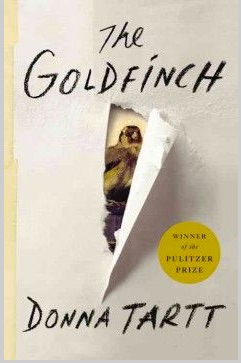
I just realized it’s Friday. I really thought it was still Thursday, but everyone was wishing a happy weekend so I had to check my computer date and, of course, it is Friday. Again. I can’t imagine what happens to the days, where they go so fast, how little I seem to be getting done, and how perfect the weather is for just snuggling in bed with a good book! Speaking of good books, what good books have you read lately? You already know my preference tends to light, fast-paced reading, so adventures, mystery and detective/spy stories, fantasy, and science fiction. When I am in the mood, though, I will read history, a lot of historical fiction, biographies, and autobiographies. When I can get my hand on them, I will read prize-winning books, and I decided to do just that when I went to a literary trivia contest with a bunch of writer friends and we won first place (woohoo!), which gave us first choice of a varied selection of books donated by Indigo. I picked the Pulitzer Prize-winning book The Goldfinch by Donna Tartt. That was several months ago. I finally decided to read it the goldfinch coverand am about three-quarters of the way done. I’m not going to present a summary here—you’ll have to read it yourself to find out the story. What I am going to say, is that one thing that came to my mind when I finally put it down a couple of nights ago (because I always read at bedtime), was Charles Dickens’s David Copperfield. The parallelisms are definitely there: Both Theo Decker and David Copperfield launched themselves into the world at the death of the mother; both boys had to live in different places, not all of them welcoming; both had a little girl they adored; both are significantly affected and influenced by another young boy who is not necessarily the best influence in their lives. I can’t really say more because I’m still not too far past halfway through. Nonetheless, Theo’s journey takes him places the way David’s has, through New York and Las Vegas painted with as much careful and colourful detail by Tartt as Dickens did the England of his times. Tartt’s attention to detail and vivid descriptions, plus the care with which she develops her characters are certainly reason enough for the book to win the Pulitzer. And that’s just the language and writing style. One must appreciate the underlying themes and the way her plot unfolds, as well, but which I’m not going to delve into right now. I’m pretty certain the complex plot, struggling characters, and attention to detail Tartt has woven into this story are why NY Times book reviewer Michiko Kakutani has called The Goldfinch a Dickensian novel. I can’t wait till bedtime.

###

The Trouble with Writing

3

Every writer I know has trouble writing.

                                         ~Joseph Heller

Why do writers have trouble writing? Let’s face it. Writing isn’t easy. Except, maybe, for my friend Patti Larsen, who won the 2014 World’s Best  Story Award and churns out about 17 novels a year. Writing requires great skill, a wide vocabulary, an unlimited imagination, and infinite patience and perseverance, not to mention guts. Writers who start out with lots of talent and nothing else don’t get very far, I imagine. They might be the one-book-wonder who disappears into quiet obscurity because they never completed another book. It really isn’t just skill in constructing great sentences and paragraphs, but skill as well in putting those together into a masterful story; the skill of organization, which helps you keep all your ideas in order and helps you develop your story in a logical manner–that is logical at least to you; the skill of observation, which provides you with an unlimited source of ideas and details that bring your writing alive. We’re already familiar with the patience and perseverance it takes to write and revise until a book is ready for publication; it takes infinite patience and perseverance to get the book out and published, and even more to get publicity and marketing up to decent levels so that you can truly say that your career is writing, and it’s not just a hobby or something you do on the side while you’re working at another job that will pay the bills until you make that bestseller or award-winner. Even before the publication stage, writers need to have the courage–the guts–and the density to push your writing out there and at the mercy of public who either love your work,  tear it apart, or ignore it. In fact, I might prefer that they tear it apart, because from a marketing point of view, that would still sell books, and controversy generates interest; whereas a cool reception would not sell a single copy. All that exposure is tied to the fragile, introverted personality the majority of writers have, so it really makes it more difficult to dangle your work out there.

An Easter Memory

0
A litter of chocolate Easter bunnies!

A litter of chocolate Easter bunnies!

Not everyone celebrates Easter as a religious holiday and children remember it mainly for the Easter bunny and Easter egg hunts. I know I looked forward to it as a child because my mum would mount an indoor Easter egg hunt for us kids after Easter Mass. She would hide chocolate Easter eggs, and the real treasures were the special large sugar eggs that you could crack open to find more little candies inside. Our Easter tradition hardly varied for many years. We would all get up early and get into our Sunday best and go to church. After church, we would all drive down to the Magnolia ice cream plant and Papa would buy a 5-quart Easter ice cream cake. Then home for the Easter egg hunt while Mama prepared dinner. When we were older, Papa would drop us off at home and then pick up the ice cream cake, which we waited for, excited to see what design he would bring. My brothers were excited too about the dry ice that was packed around the cake, because then, they could fill a tub of water in the bathroom, living room, or carport, and drop the dry ice into it to create a cool fog that spilled over into the rest of the house. The best thing about it was that it was SOLID ice cream, with the most delicious creamy frosting (unlike our DQ cakes which have a cake layer under the ice cream). We would have a different design each year, but on most years we would have either a bouquet of ice cream Easter lilies and daisies or a solid ice cream Easter bunny and eggs. Each of the 4 of us (my sister had not yet been born, and until she was old enough to pick for herself, she’d just have whatever we served on her plate) would pick our choice but still get whatever my mum put on our plates if she was the one serving. Of course, the ice cream cake was the pièce du resistance, after a glorious Easter ham that mama had ironed with sugar and glazed pineapple. I don’t remember when the tradition stopped for us, because after High School, I left home and hardly visited. When the grandchildren came, however, the Easter egg hunts resumed and I know my children, nephews, and nieces, have as fond memories of Easter Sunday at Mama’s as I do.

~cpl 2015

India’s Daughter: changing the attitude towards women

0

The violent rape of a young, progressive-minded woman in India has sparked outrage among India’s youth and provoked a much needed examination of a society that suffers from the effects of a strong and stubborn system of discrimination against women, further aggravated by extreme poverty,  domestic violence, and lack of proper education. To see real and significant change, however, the push has to come from within–from the youth who understand things can and should change; from those who have been educated and enlightened and desire change; from women who understand their true worth and the fact that they do not need to depend on men to feed them or protect them; from all progressive minds within the country who know that their society cannot move forward with such backward thinking; from everyone in the country who wants a better life and believes that there is a way out of their quagmire.

I’m glad this BBC documentary is now circulating the world on the Internet. It may not be enough to change everything, but hopefully, it will spark greater action that will, in turn, incite greater positive changes to an obsolete way of life.

Please take some time to watch India’s Daughter now by clicking on this link:

https://vid.me/e/gM6j?autoplay=1<div><a href=”undefined?source=embed” style=”font-size: 11pt; text-decoration: none;”></a></div>

Lunar New Year + New Leadership = Change???

0

It’s the last week to February and we’ve had some wild winter weather. In 4 weeks, it will be officially Spring; in 2 weeks, we’ll be setting our clocks ahead for DST. We will celebrate the Lunar New Year, better known as the Chinese New Year, ushering in the Year of the Sheep, which starts on the 22nd of February. The Liberal Party is holding its leadership convention and Premier Robert Ghiz is turning over the reins of government to Wade Maclauchlan, former President of UPEI. I wonder how an academic will fare in position as tough as Premier of PEI. There will be many good things, I’m sure, including a clear understanding of the importance of education and culture. I hope that will be enough for him to drag the educational system into the 21st century and perhaps bring along the change that will make PEI’s educational system comparable to the best in the world, similar to Finland. I hope that he will recognize the need to upgrade the system and impress the importance of adequate, if not excellent writing skills. I hope that he will improve the status of teachers and teaching because this profession is in the forefront of ensuring a well-trained, critical-thinking workforce that will become the backbone of PEI’s economy. I hope he will unite all PEI communities in building up the province, and equalize so many things that are blatantly unequal. I hope a lot of things for PEI’s new leadership, but I also hope that islanders pull together to make this tiny island province a much better place to live in.

The Snowy Owl

0

I have seen few large wild birds in their natural habitat and my encounter with a snowy owl was an exception. It was late at night one winter when I was sitting in a car with a friend, chatting and enjoying the view of the frozen river and the white snow around us when a snowy owl landed, seemingly out of nowhere, on the boardwalk a few feet away from the car. It sat on snow, eying its surroundings, its magnificent head turning, its bright yellow eyes blinking occasionally.

For several minutes, it just sat in the cold snow, its wings not tucked in but trailing on the snow. When it finally moved, it was in a waddling walk, one wing tracing a shallow trail in the snow beside it. Clearly, the bird was not made for walking. After walking a bit, it flapped its wings and rose a few meters in air no higher than the top of a lamppost that cast its white glow into the cold air, then settled back on the ground as if exhausted and lost after a long journey from some snowy mountainous region in the Maritimes. Perhaps it had come across the Gulf of St. Lawrence, buffered by the recent snowfall and biting winds.

The owl was a splendid creature with its brown-and-black-tipped white feathers that made it look like it had silvery tufts tucked into its plumage. We assumed it might have hurt its wing and had sought respite on our island, finding shelter under the Hillsboro bridge. Before long, another owl, almost a pure white, landed a few feet farther than the first, but that one did not stay, launching over the frozen inlet and disappearing under the bridge before long. We surmised that the birds were mates and were seeking refuge because one of them had been hurt.

My companion, ever concerned, ever helpful, stepped out to see how badly hurt the bird on the ground might be, approaching it warily. He was concerned the bird might be attacked by a fox that had, only a short time earlier, prowled along the river’s edge on some nocturnal mission. I warned him to take care because owls, after all, are wild birds and predators, their small hooked beaks sharp, their long and threatening talons camouflaged under feathered feet. My friend stopped a little more than an arm’s length from the owl, thinking its wing broken, and for a split second, man and bird stood under the same circle of light, creating a frosty mist in the crisp night air. One second then the bird gathered its wings and lifted them, drawing ever so slightly closer to the man, hovering for but a moment, before it pulled away and lifted into the air, flying after its pair to find shelter under the bridge. Did the bird think it was being threatened? Would it have attacked the man? Perhaps the trailing wing was merely a ploy to attract prey. It could have spotted the fox and planned on abducting it, but encountering a creature larger than it could possibly lift across the icy inlet, it changed its mind and decided to retreat instead. We guessed it must have been that because it spread its majestic wings, longer across than my friend was tall–and he is not a small man–and swooped away, gliding like a white kite in the night without the slightest hint of an injury. It disappeared under the bridge, invisible in the shadows.

It was on the news, the next day, that a pair of snowy owls had taken up residence under the Hillsboro bridge, and after a few more days of being in the forefront of unusual events of interest only to the locals that long winter, the birds were found to have abandoned their temporary shelter. It was my first encounter with a bird that has long enthralled me because of its beauty and wildness and its symbolism as the wisest of creatures. It was more magnificent than any photograph could ever depict and, in making its choice to leave us, undoubtedly wise in choosing the wintry wilderness where it was born and, without human interference, will hopefully live out its life.

©Cindy Lapeña, 2015

Je suis Charlie!

0

Very recently, the world reeled in shock when France experienced a hostile attack in the heart of Paris, resulting in several deaths, all in retaliation against Charlie Hebdo, a satirical French publication that has made itself known for its political cartoons. It is sad when writers and artists become the objects of vitriolic attacks by people who, because of their extremist views and actions, become the subjects of satire. I find satire to be a powerful and amusing way to nudge personages who have called undue attention to themselves through socially unacceptable behaviour so that they might examine their actions and, hopefully, reconsider and modify them. Unfortunately, there are those who are poor sports and cannot accept this ribald form of criticism with a chuckle and a grain of salt. Vive la liberté d’expression! Vive la liberté de la presse! Je suis Charlie!