Evangeline Revisited

0


A Review by Cindy Lapeña

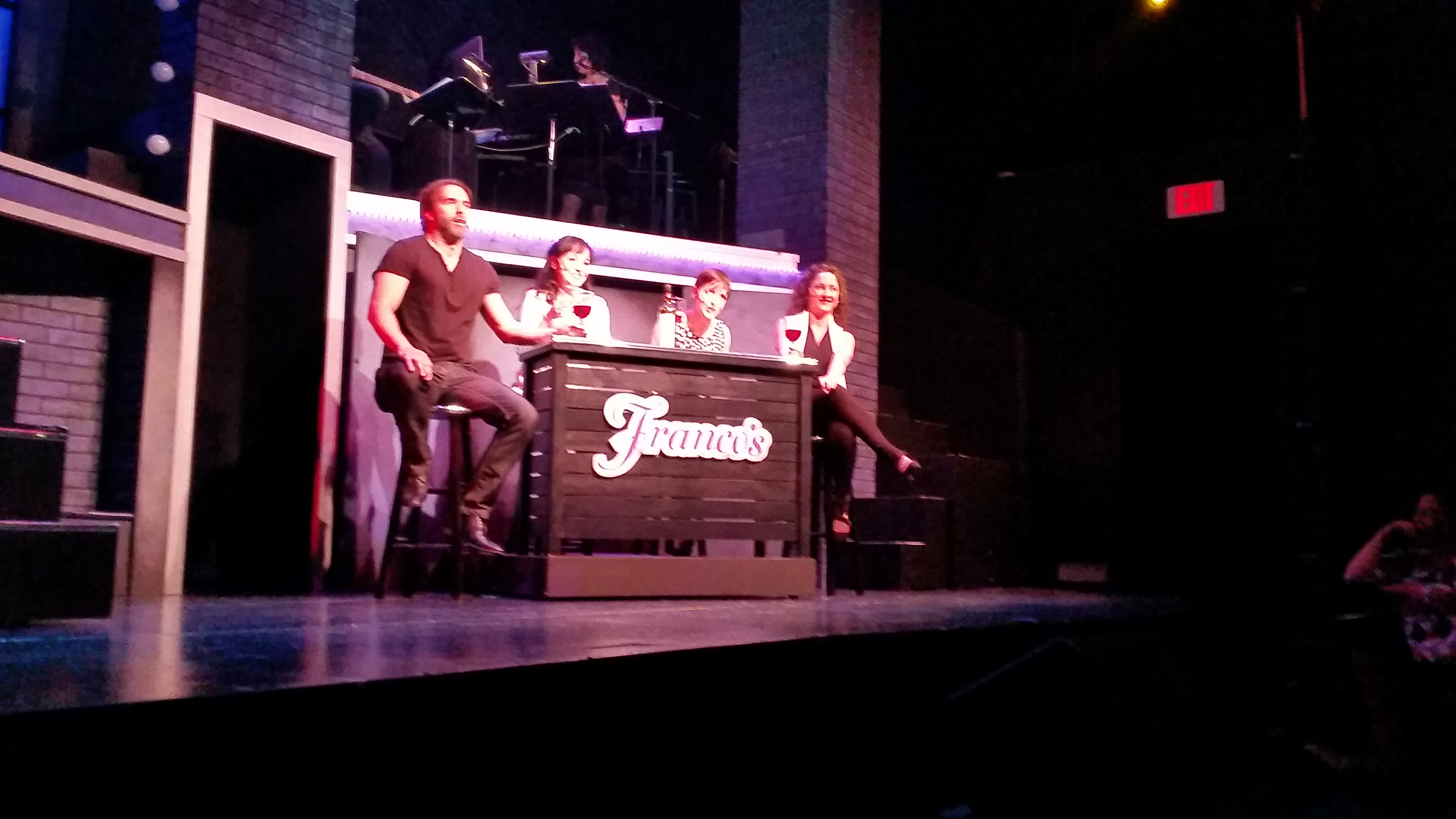
When Evangeline premiered in 2013, a new world-class musical was born and PEI stage was THE place to be. It’s 2015 and the Charlottetown Festival has brought back Evangeline with a few changes, and I must admit that I quite liked what I saw.

Except for two major actors whose roles have been reprised and a couple of members of the ensemble, this year’s cast of Evangeline is totally new. Whereas, Josée Boudreau played understudy in 2013, she carried the role of Evangeline Bellefontaine marvelously with her powerful soprano and forceful character. Jay Davis, whom I first saw in Bittergirl, played an admirable Gabriel Lajeunesse opposite Boudreau’s Evangeline. His wonderful voice, at times gritty but always very masculine and powerful, dominated the ensemble. I’m hoping it was a matter of balancing the wireless microphones, but he literally drowned out Boudreau in at least one of their duets. At times, it felt as though the songs were not really composed for him. All the Broadway-style belting is overpowering, and I would have appreciated a great deal more sensitivity, texture, control, and subtlety in the interpretation of some of the songs besides full-volume delivery. Réjean Cournoyer as the invented character, Captain Hampson played the perfect villain as he did the first time around, just as Laurie Murdoch as Colonel Winslow revealed the conscience behind the whole idea of the Expulsion of Acadiens, reprising the role that humanized a reprehensible historical event.

The backdrops made use of video technology, as they did in the premier showing, but rather than using the bright paintings of Claude Picard, a generally darker atmosphere pervaded the new sets designed by Cory Sincennes. I loved most the water scenes, with the actual waves moving in the projected backdrop, which added to the feeling of realism. The images projected on the backdrop were more carefully chosen so that they blended much better with the scenes. There was greater use of the revolving stage, which enhanced the movement across space and time, and eliminated the more realistic sets used in the premier. The basic set of rough-hewn lumber beams crisscrossed over the movable wings, was repeated in the stylized boardwalk that became decks, ladders, shelters, ships and boats. I would have liked to see that same feeling of roughness and simplicity in the crucifix used in the final scene. I’m glad water scenes were kept, because those were some of my favourites, especially with Gabriel and Evangeline rowing through the swamps, although Boudreau’s boat was not moving too smoothly, which occasionally jarred the illusion. It was a tad distracting, as well, to see movement under the sets when characters who were not part of the scene remained partly hidden, something that can so easily be solved by perfect stillness to maintain the illusion that they are not even there. Another tiny technical issue: the notice of Expulsion was tacked to a beam, but thumbtacks were not invented until 1903. I would have expected the soldier who posted the notice to use a nail and hammer. I would also think that he would have done this less surreptitiously as it symbolized the beginning of the tragedy that was the Expulsion.

I did not care very much for more than one ensemble dance number to end with the same parallel arms raised uniformly stiff above their heads; I felt that was somewhat awkward and neither very aesthetically nor symbolically significant. I seem to remember a little more dancing in the premier as well.

There were moments in the gala performance when I felt that the cast had not completely gelled together, and that some of the actors were still feeling their roles and not quite their characters. As well, I missed the completely smooth transition from one scene to another throughout that I have come to expect from the Centre’s performances.

That said, I would watch Evangeline again and again and again, because, as a theatre person, I know that no two performances will be exactly the same, and the gala performance was but one show. It is still, and always will be, a powerful story with beautiful music and lyrics. This new version of Evangeline has so much going for it and I am sure that, when everything falls into place, the brilliance of writer and composer Ted Dykstra and the vision of director Bob Baker will shine through.

###

This review is also available on onrpei.ca

The premier performance of Evangeline was also reviewed by this writer. Read the review here.

The Darkness in Comedy: Another Look at Blindness

0

I caught a performance of Blindness: A Dark Comedy, a play by Mariève MacGregor, one of several performances in this year’s Charlottetown Fringe Festival. For those who are not familiar with the Fringe Festival, it is a frenzied weekend of one-act plays and one-person shows that have audiences running all over the downtown area with barely 20 minutes in between performances to get to the next venue. Or you can get a schedule ahead of the weekend and plan your 4 days so that you can leisurely stroll to the ones you want to see beginning at 5 p.m. and straggling home around 11 or midnight. Each show is staged at different times on each day of the festival, so it’s quite possible to catch all of them within the earlier hours of the evening. More risqué topics, however, are restricted to much later hours. All performances are free entrance with donations recommended.

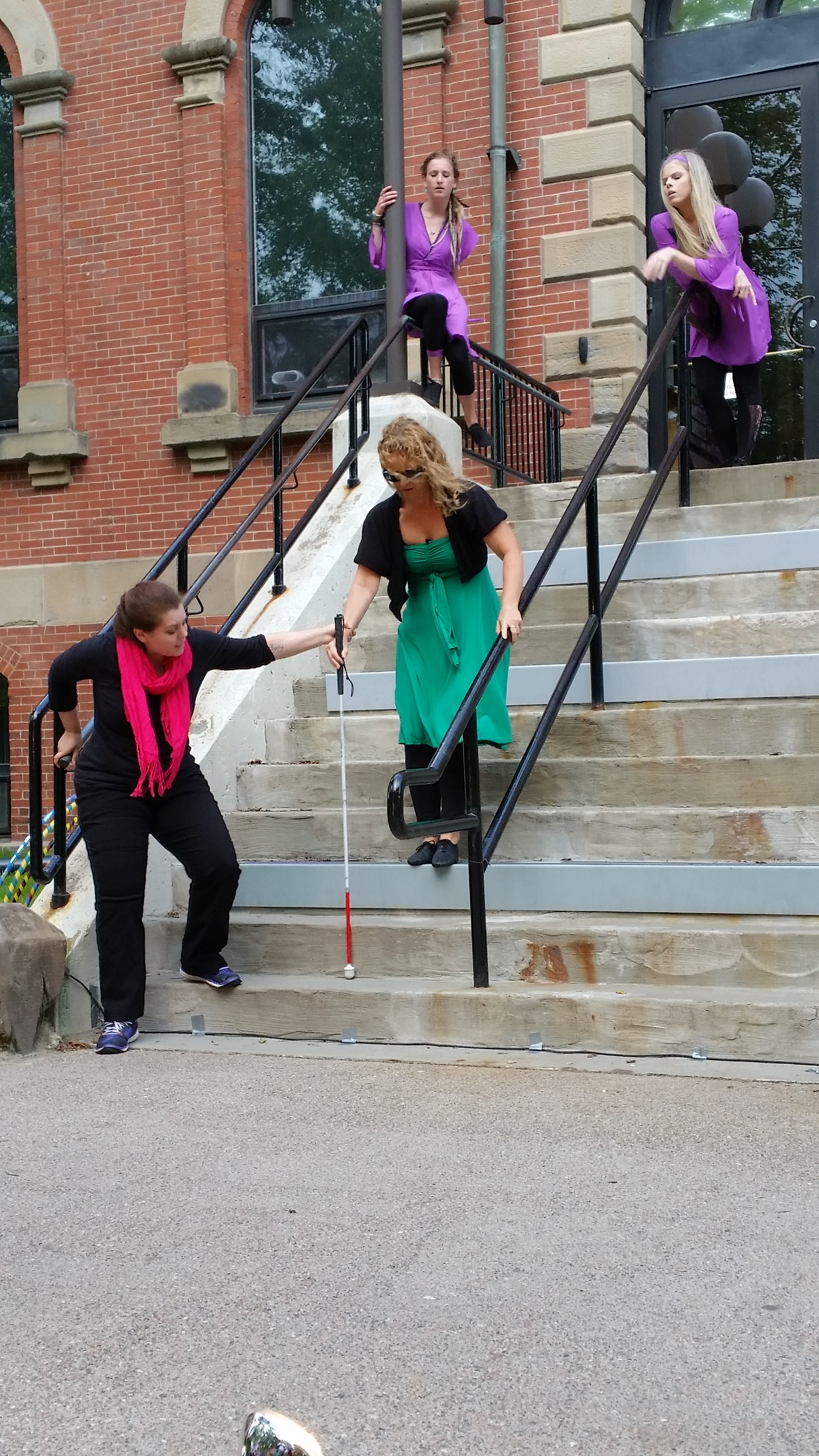
Back to the play I saw. Blindness is a biographical play that is based on the playwright’s actual experience of blindness from an unusual condition whereby the body produces too much blood, causing it to leak into the retina, which prevents a person from seeing. There was humour, no doubt, as the dialogue made light of a variety of situations encountered by blind people and how others can be oblivious to it or not know how to deal with it. More than just humour, though, the play was extremely enlightening in that it explained a great deal about the condition and the situation from first-hand experience. Something like Helen Keller’s autobiographical stories, but with fun. I have to admit that, while I did find the humour funny and the monologues informative, it was an awkward kind of funny–which was the general feeling I also got from the audience, who seemed unsure whether to laugh or not at times. It’s pretty much like when we make jokes about disabilities, race, and cultures. Political correctness and politeness keeps us from making jokes that might be seen as offensive especially if we aren’t the ones with the condition/race/culture. It’s okay for the Irish to make fun of the Irish, but if anyone else does it, it becomes offensive. In that vein, it might have been perfectly all right for the playwright to make light of her condition, but I thought the audience was not too sure if it was all right for them to laugh at her situation. I guess that’s where the dark comedy part comes in. 

Is there something you know is funny but have a hard time laughing at? Share your moments of dark comedy on The Writing Pool !

Blindness: To Laugh or Not to Laugh

0

A review by Cindy Lapeña

I was able to catch a performance of Blindness: A Dark Comedy, a play by Mariève MacGregor, one of several performances in this year’s Charlottetown Fringe Festival. For those who are not familiar with the Fringe Festival, it is a frenzied weekend of one-act plays and one-person shows that have audiences running all over the downtown area with barely 20 minutes in between performances to get to the next venue. Or you can get a schedule ahead of the weekend and plan your 4 days so that you can leisurely stroll to the ones you want to see beginning at 5 p.m. and straggling home around 11 or midnight. Each show is staged at different times on each day of the festival, so it’s quite possible to catch all of them within the earlier hours of the evening. More risqué topics, however, are restricted to much later hours. All performances are free entrance with donations recommended.

Ba2015-08-06 18.07.06ck to the play. Blindness is a biographical piece based on the playwright’s actual experience of blindness from an unusual condition whereby the body produces too much blood, causing it to leak into the retina, which prevents a person from seeing. There was humour, no doubt, as the dialogue made light of a variety of situations encountered by blind people and how others can be oblivious to it or not know how to deal with it. More than just humour, though, the play was extremely enlightening in that it explained a great deal about the condition and the situation from first-hand experience. Something like Helen Keller’s autobiographical stories, but with fun. I have to admit that, while I did find the humour funny and the monologues informative, it was an awkward kind of funny–which was the general feeling I also got from the audience, who seemed unsure whether to laugh or not at times. It’s pretty much like when we make jokes about disabilities, race, and cultures. Political correctness and politeness keeps us from making jokes that might be seen as offensive especially if we aren’t the ones with the condition/race/culture. It’s okay for the Irish to make fun of the Irish, but if anyone else does it, it becomes offensive. In that vein, it might have been perfectly all right for the playwright to make light of her condition, but I thought the audience was not too sure if it was all right for them to laugh at her situation. I guess that’s where the dark comedy part comes in.

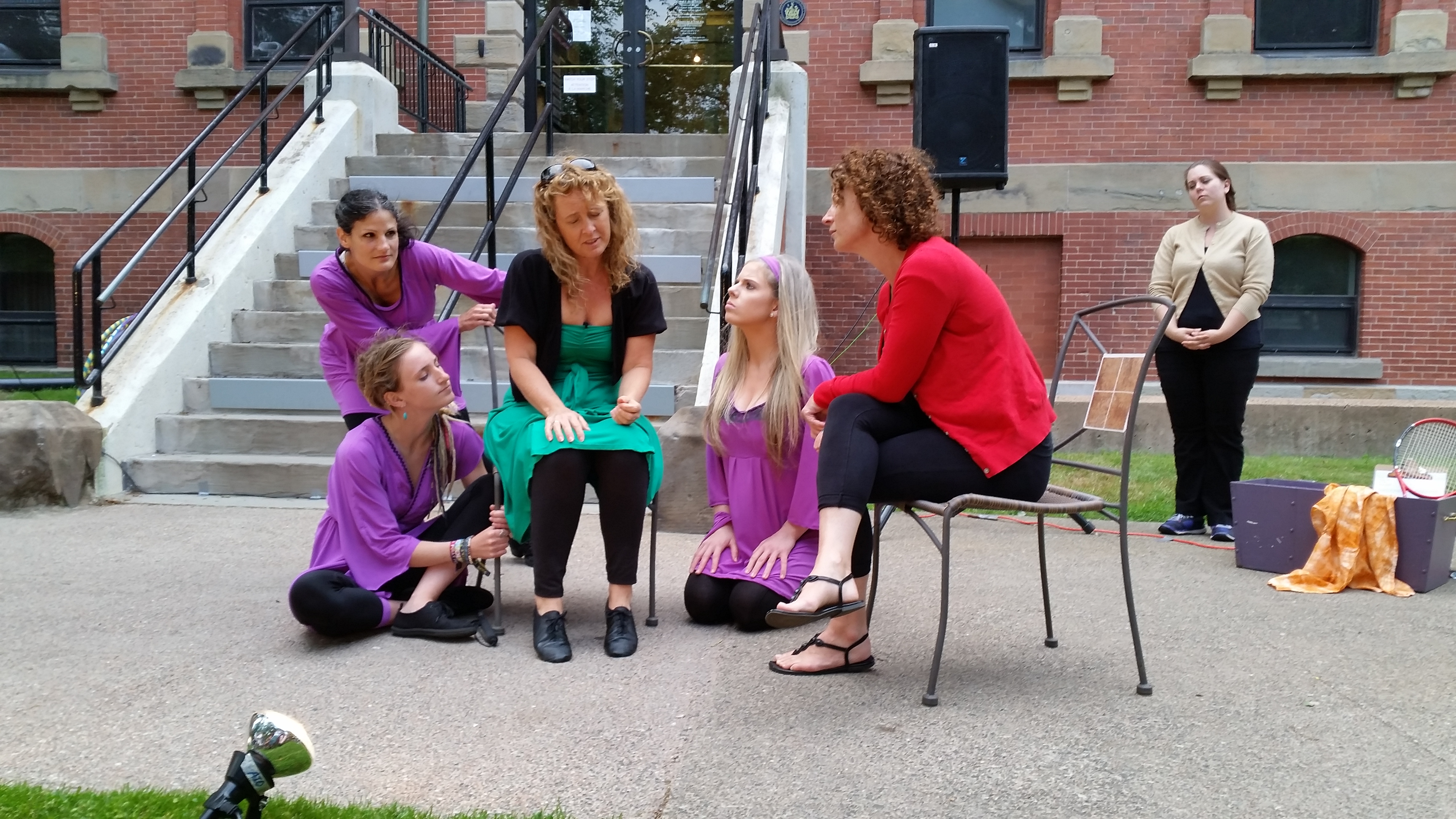
2015-08-06 18.24.18

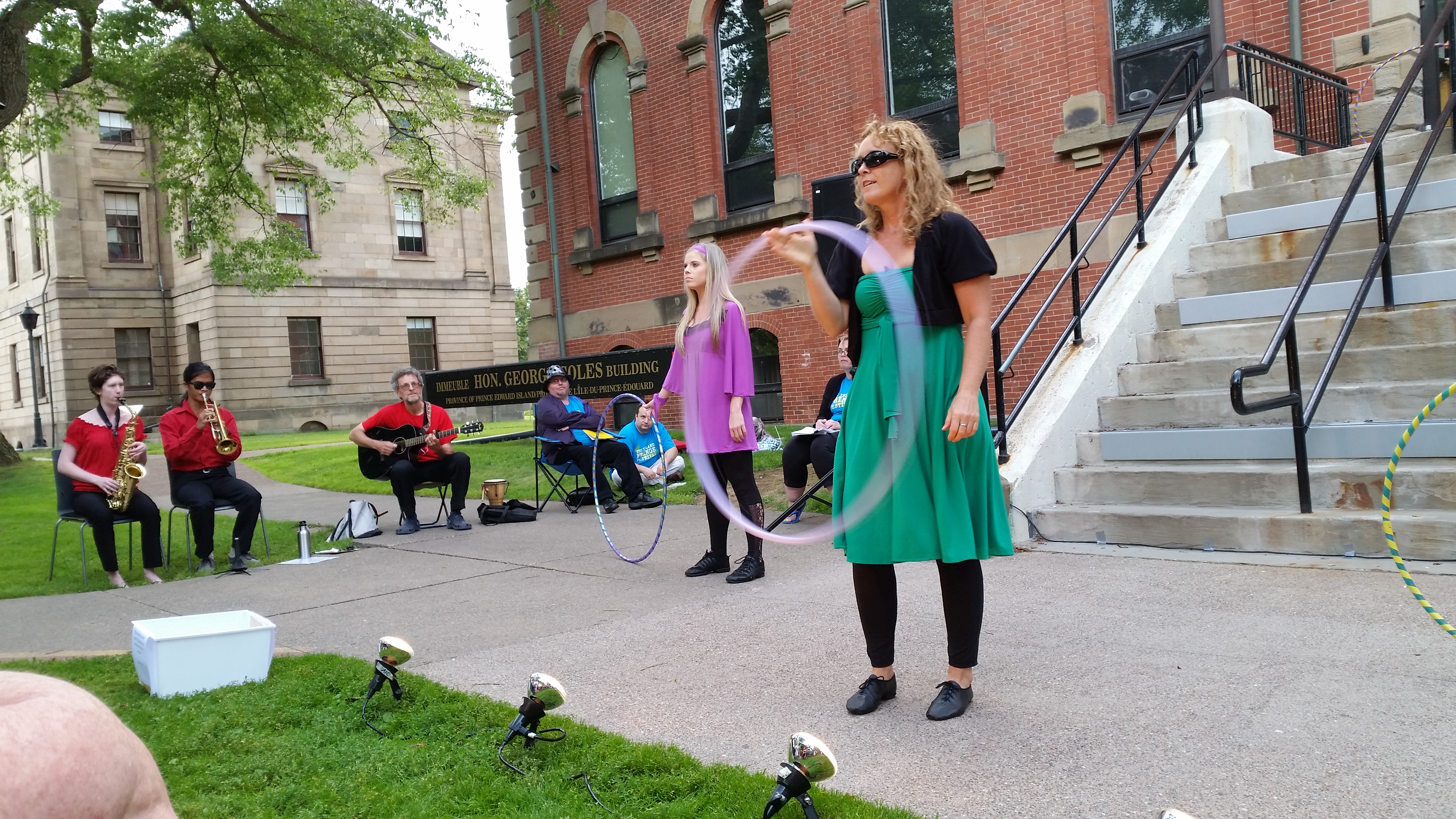
As for the skill levels, one has to remember that the Fringe Festival is just so called because the works are by budding artists, novices, or amateurs if you will. The acting was decent, not bad for a troupe that was put together in a few short weeks. However, I could not get a feeling of passion or conviction from the troupe as a whole. I think the funniest characters were those interpreted by Andrea Filion, until she dove into a monologue. The problem with performing in an open space, is that the space drowns the characters. Even if I was sitting in the first row, I could not feel enough tension holding the ensemble together, nor was there enough projection, so that the acting was not big enough to magnetize the audience. I have to say that Ellen Carol‘s skill at hoops is impressive, considering she does it while delivering one of her monologues as the main character, Emma;  I do wonder if that is something the playwright did as well, although it might have been mentioned during the monologue. Even then, the point of using hoops was completely lost on me. Was it symbolic, perhaps, of her having to jump through symbolic hoops to get through her condition?

2015-08-06 18.13.34

The fact that the main character had three characters playing her psyche, was, I think, not exploited enough. The psyches could be a more powerful vehicle for the comedy. I believe their presence and lines should have been more closely integrated with the main character, instead of being relegated to passively watching her in the background most of the time. There was also quite a bit of monologue, which was really explaining details of procedures or the affliction, which tended to drag. It is a prolixity that could have been avoided by involving the psyche more. Don’t get me wrong, but unless a monologue is as powerful as Hamlet’s delivered as engagingly as Kenneth Branagh would, then don’t do the monologue. Those monologues could have been improved by breaking up the information into bits of dialogue involving the psyche so that they sounded less like lectures and more like a person struggling with coping with her fears and situation.

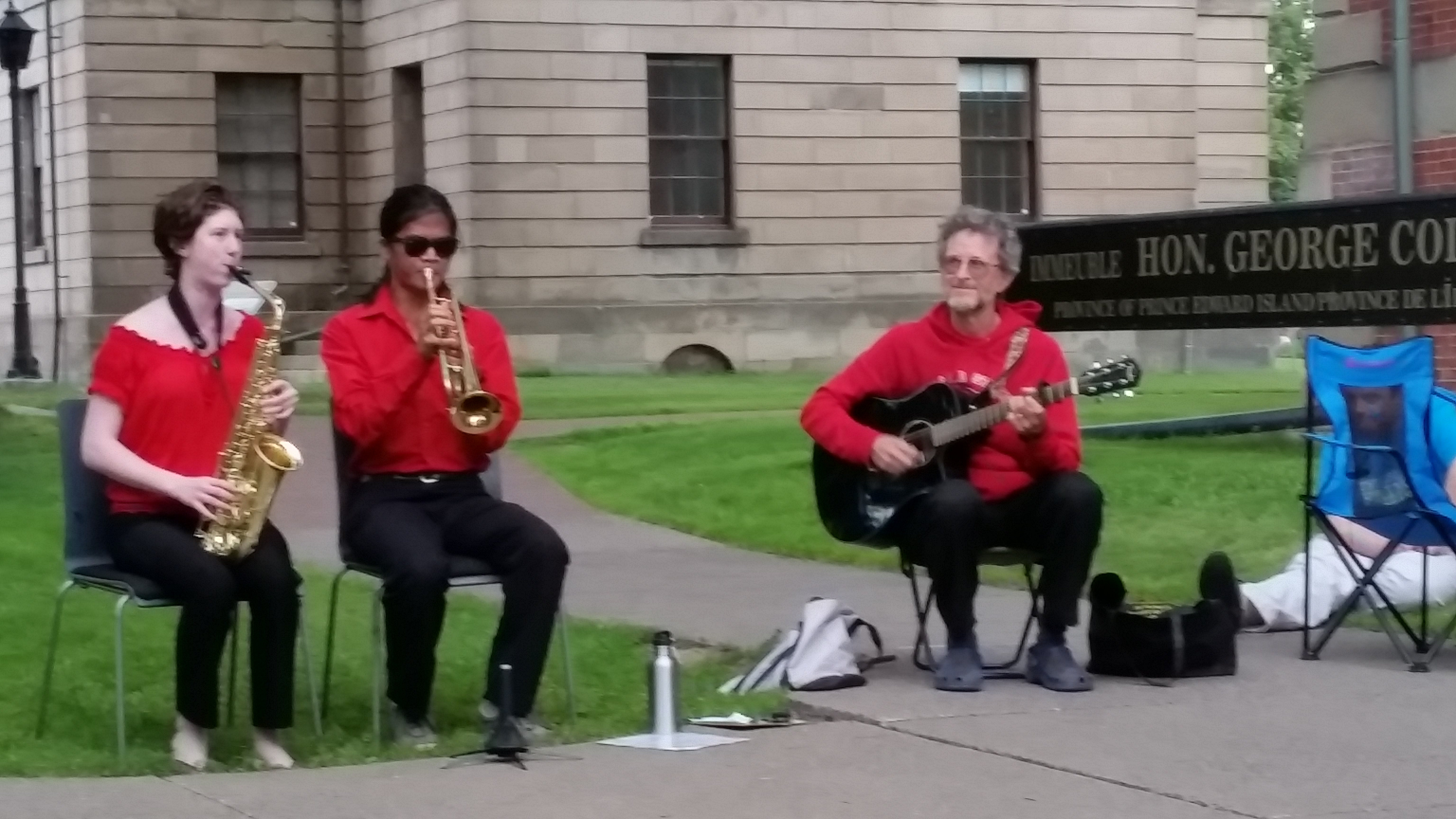
I have to say that one of the most brilliant choices was in the original music. To set everything to a jazzy beat provided by 2015-08-06 18.45.21   Justin Amador and Charlotte Large with those couple of folksy gospel song-like choruses by Tony Reddin at the beginning and end really set the tone for the comedy. If the pacing and acting had followed that jazz beat throughout, it would have been a great performance. In fact, I would have liked more music interspersed with the dialogue and a more active part of the performance, particularly since some bars were finished before they could even be appreciated. I’m just imagining involving the musicians in the dialogue by making them parts or voices of the psyche.

I would certainly like to see this play developed more and performed to wider audiences, because of its educational value. Here’s hoping that someone will pick up the sponsorship to bring this play all over PEI and elsewhere.

###

*A version of this review is available on onrpei.ca

Bittergirls Isn’t Bitter At All

0

Immediately after a list of songs from the 50s and 60s by groups and singers I’m sure are unrecognizable to the average 30-some or younger audience members, the Bittergirls programme production summary promised “Audiences will howl in recognition at the fast-paced and heartbreakingly hilarious tale interwoven with their favourite hurting and loving girl-group songs.”

2015-07-04 19.38.14“Heartbreakingly hilarious” might sound like an oxymoron to you. After all, how can heartbreak be hilarious, especially        after you’re dumped by a your boyfriend, or live-in partner, or husband for some really lame reason you know is not true? I’m sure any girl-woman who’s been through “the one big heartbreak” understands that, and has spent hours, days, maybe even weeks and months, listening to the saddest and most depressing love songs to remind them of the heartbreak. Of course, years after, in much better relationships and places, we find that period laughable, to say the least, assuming we got over it.

2015-07-04 19.53.30It’s precisely that point when we find it laughable that we’re able to enjoy this rib-tickling, belly-achingly hilarious production where we follow three bittergirls through their break-ups through songs, and what powerful and memorable songs they are! We laughed because we were mostly an audience on the higher end of the number scale and did we know those songs! I was telling my companions at our table at The Mack, that those who sang along would be giving away their age. I have to admit that I knew those songs and listened to them, not necessarily because I listened to them going through a break-up—well, okay, maybe one or two—but because I listened to them as a kid. Of course, anything by Burt Bacharach, Donna Summer, Dionne Warwick, or Elvis Presley would be familiar to even some of the younger audience, but whom among the younger generation would recognize The Supremes, The Crystals, The Three Degrees, etc.? Back then, group singers were a really hot thing and there would always be harmonization and vocal arrangements, so having three women who are all powerful singers belting out these songs in true Broadway style was a throwback to that time.

2015-07-04 19.53.23While the musical was really about the Bittergirls’ biggest breakups with songs describing exactly how they felt and dealt with their personal tragedies, Jay Davis, who played everybody’s heartbreaker turned out to be more of a charmer and a heartthrob who stole the scene from the girls each time he sang in true King-ly fashion, complete with gyrating hips atop his very own pedestal with full marquee lights and glittering belt. A more rowdy audience would have filled the theatre with catcalls, whistles, and howls, but it was enough to bring the house down with mirth. Still, it was definitely a girl-show, and to quote Sean Casey as repeated to me by his wife Kathleen Casey, “Men had better park their egos at the door” before they watched the show.

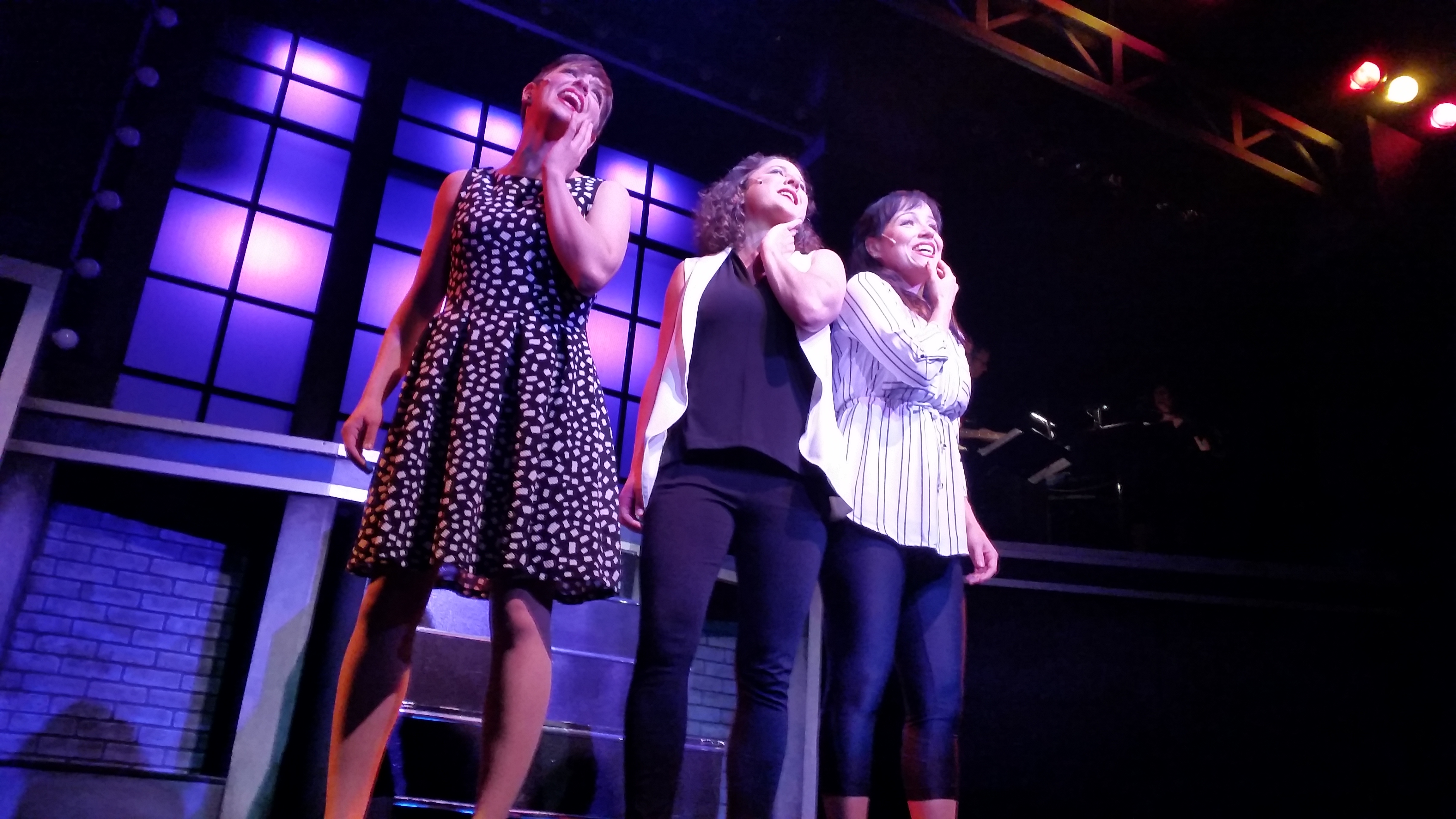
2015-07-04 19.40.15I loved Steffi DiDomenicantonio with her Liza Minneli-sh cropped hair and big dark, thick-lashed eyes and just as powerful voice singing through her abandonment by partner-who-found-another. Rebecca Auerbach played the martyred breadwinner-mom-woman who sent her husband through university only to be abandoned so he can pursue other dreams. Women in her place shouldn’t be allowed to play with Barbie and Ken dolls! To round off the trio was Marisa McIntyre, the girlfriend who dreamt of the perfect love story and happy ending but never got the proposal. While their voices all rose to the occasion, McIntyre’s stage presence was not always up to par with the other two girls. With the quick pacing and turnover of lines and songs, however, this was hardly noticeable. That these three energetic ladies could sing through dancing and, yes, an aerobics workout, left me gasping and exhausted from the exertion, not to mention amazed and in total awe. Choreographer Nicola Pantin outdid herself there.

That the production entertained the audience thoroughly is completely undisputed. The one thing that would have increased my enjoyment would be a better modulation of the mics for the small space that The Mack is. Perfect miking means no echoes and no picking-up of each other’s voices—which happened in more intimate scenes, such as the bedroom scene—so that the voices sound perfectly normal rather than enhanced by microphones. McIntyre’s mic, in particular, echoed more than the others, and when she hit some high notes, there was a tad bit of shrillness to the echo, which was a little jarring to the eardrums.

As for the story, I don’t think there was really meant to be much of a story as much as it was meant to poke fun at how girls tend to (over)react to a break-up, making it a major tragedy of catastrophic proportions—the equivalent of the first act, until, in the end, they realize that they will survive à la Donna Summers. It also poked at men, on the other hand, who are portrayed as egotistic and insensitive, and yet we do fall over, bend over, gush over, and agonize over them.

2015-07-04 19.40.42It was a delight to see the creators, Alison Lawrence, Annabel Fitzsimmons, and Mary Francis Moore, who came up on stage as they were introduced by past Artistic Director Wayne Hambly. I think the hardest part of the writing would have been to find the perfect songs to match their scripts and pull them together seamlessly into one supremely entertaining musical extravaganza with a story line. Kelly Robinson’s staging was flawless with maximum use of Cory Sincennes’s highly versatile set that optimized every nook and cranny of The Mack’s diminutive platform. I found the slide-out sets and hiding places a delight and waited to see what part of the set would reveal something different. I like the fact that Robinson utilized the audience area as well, which was somewhat symbolic of a breakout and a breakthrough in the stages of breakup. I’m not sure it was meant to work that way, but it does work, when one looks more closely for what is significant. If it isn’t in the original script, I think Sincennes’s set design and Robinson’s stage directions should become part of it.

One final word in parting, though, and it has nothing to do with the performance: it felt like the caterers did not want the food served at the gala reception to be eaten at all—there were no plates, the fillings were unidentifiable by sight alone, albeit delicious, and they were impossible to eat with fingers, but no forks or picks were provided. I think, for that reason alone, there was so much left after most of the audience had gone.

###

*Also available on onrpei.ca

The Silliness in the Looking-Glass: A Review of Alice Through the Looking-Glass

0

The Silliness in the Looking-Glass: A REVIEW*

By Cindy Lapeña

I have great memories of Lewis Carroll’s pair of books: Alice in Wonderland and Through the Looking Glass, which I first read as a very young child in a single-volume Children’s Classics Edition. Back then, I didn’t know what to make of the jabberwocky or brillig and no dictionary search could help me, yet the poems did make sense in my child’s mind. Watching James Reaney’s stage adaption of Through the Looking-Glass as interpreted by directors Jullian Keiley and Christine Brubaker for the Confederation Centre of the Arts’s 2015 Charlottetown Festival brought back wonderful memories of my childhood reading and the zany characters that populated the pages of Carroll’s timeless stories. Kudos to set and costume designer Bretta Gerecke for the amazing and innovative sets. I thought that it was extremely clever to show the scene changes by having the cast wheel them about with bicycles. The stylized and whimsical designs for the sets felt like something out of a cross between Dr. Seuss, Roald Dahl, and Tim Burton—straight out of a child’s imagination.

Admittedly, there was a lot of cheesiness and tongue-in-cheek acting, but it enhanced the story so much so that, instead of the existing film interpretations, which feel like literal and somewhat serious interpretations of the book, the stage production created humour and evoked hysterical laughter from the audience at almost every turn. It was so entertaining with so many surprises dropping down or popping out at the audience that one could not help but be completely engaged with the performance. The use of human Zorb bubble balls was another huge surprise and I could only think of how much fun it would be. There was a great deal of complicated and complex choreography by Dayna Tekatch, interpreted by the Confederation Centre’s resident choreographer Kerry Gage and executed perfectly by the cast.

Speaking of which, the casting was brilliant, and way the chorus was dressed and acted was largely responsible for chortles that broke out from different parts of the audience each time they appeared. I had always read Carroll’s two books as somewhat serious adventures where the well-mannered Victorian Alice just could not understand why everything had to be so illogical and so silly, but this interpretation has given me a totally different and fun perspective on the story. It has made me see this from a child’s point of view, which could be just what the author intended in the first place. That the looking-glass world was also funny was evident throughout and magnified by the silliness of the acting.

I have to admit that I was taken aback by Natasha Greenblatt’s powerful and lower-register voice, which is the opposite of the almost shrill falsetto childishness of the Alices of film, but once you get over the it in the first scene, it grows on you and becomes a warm, conversational tone that does not jar the eardrums. The Red and White Queens, Charlotte Moore and Eliza-Jane Scott were spectacles on their own. Qasim Khan as the White Knight was a walking—or rather, rollicking, bouncing—comedy and the knight’s horses were a riot. While Hank Stinson as the Red King uttered nothing more than snores, his sleeping presence commanded enough attention to keep the audience in stitches. The White King, Rejean Cournoyer, on the other hand, stole his laughter as he executed his single-square moves in his scene.

As town councilor Greg Rivard said, it was a bit slow starting but was thoroughly enjoyable and interactive by the second act, so that his kids enjoyed it very much. That children will enjoy it is undoubtable, as one little child yelled out answers to Alice’s questions, adding to the entertainment value. Unless you are an avid reader, I would not suggest reading the books, though, as the turn-of-the-century language lacks the vibrancy, humour, surprises, and pacing that the play brings. The 2 ½ hours it took from beginning to end didn’t seem like 2 ½ hours at all, except, maybe, before Alice stepped through the looking-glass.

I could go on and on about each cast member’s performances and the clever costumes and props, but that would be giving too much away. Suffice it to say, there were surprises in every scene and you just have to see it for yourself. I do not know if the original performance of this play was meant to be interpreted this way, but I couldn’t care less because this version is what I want to remember from now on.

###

 *Also available on www.onrpei.ca

Merry May (poem)

2

‘Tis the merry month of May and yet the buds do hide

The ground is soft and mushy brown

In places where the wintry blanket’s thrown

The trees stretch out their knobby hands

The fingertips bulging waiting wanting to bloom

The sun only teasing winking peeking behind the gloom

As the trees stretch out their knobby hands

Waiting to bud in this merry month of May

My balcony blooming while snow still lies on the ground in May 2015

My balcony blooming while snow still lies on the ground in May, ©Cindy Lapeña 2015

©Cindy Lapeña 2015

An Easter Memory

0
A litter of chocolate Easter bunnies!

A litter of chocolate Easter bunnies!

Not everyone celebrates Easter as a religious holiday and children remember it mainly for the Easter bunny and Easter egg hunts. I know I looked forward to it as a child because my mum would mount an indoor Easter egg hunt for us kids after Easter Mass. She would hide chocolate Easter eggs, and the real treasures were the special large sugar eggs that you could crack open to find more little candies inside. Our Easter tradition hardly varied for many years. We would all get up early and get into our Sunday best and go to church. After church, we would all drive down to the Magnolia ice cream plant and Papa would buy a 5-quart Easter ice cream cake. Then home for the Easter egg hunt while Mama prepared dinner. When we were older, Papa would drop us off at home and then pick up the ice cream cake, which we waited for, excited to see what design he would bring. My brothers were excited too about the dry ice that was packed around the cake, because then, they could fill a tub of water in the bathroom, living room, or carport, and drop the dry ice into it to create a cool fog that spilled over into the rest of the house. The best thing about it was that it was SOLID ice cream, with the most delicious creamy frosting (unlike our DQ cakes which have a cake layer under the ice cream). We would have a different design each year, but on most years we would have either a bouquet of ice cream Easter lilies and daisies or a solid ice cream Easter bunny and eggs. Each of the 4 of us (my sister had not yet been born, and until she was old enough to pick for herself, she’d just have whatever we served on her plate) would pick our choice but still get whatever my mum put on our plates if she was the one serving. Of course, the ice cream cake was the pièce du resistance, after a glorious Easter ham that mama had ironed with sugar and glazed pineapple. I don’t remember when the tradition stopped for us, because after High School, I left home and hardly visited. When the grandchildren came, however, the Easter egg hunts resumed and I know my children, nephews, and nieces, have as fond memories of Easter Sunday at Mama’s as I do.

~cpl 2015

LIBBY (a short story)

2

I wrote this story one afternoon, as an exercise in writing at a workshop with my wonderful writing group.  I hope you enjoy it. ~cindy


LIBBY

“Dammit! I can’t find my coat.” Libby rummaged through the pile of clothes in the tiny hall closet of Ruben’s trailer. “Has anyone seen my coat?” she yelled at nobody in particular. “I’m gonna be late for work and I need my coat! It’s chilly out and I’m not about to catch a cold because if I don’t work, nobody eats!”

Libby’s eyes smarted from trying to hold back the tears. Her voice caught in her throat as she considered her situation. Living in Ruben’s trailer home was difficult, especially since there were now four of them in it.

“Leave me alone, Jesse!” Lily’s voice whined from the bunk-type bedroom that really wasn’t anything more than a walk-in closet between the main bedroom and the bathroom. “Stop kicking me.”

“I’m not kicking! I was just stretching!” Jesse’s voice answered.

“Well, don’t stretch your feet where I am,” Lily retorted.

“I can’t help it! This bed’s just good enough for one person. I was fine in it before you moved in!”

“What do you mean by that?” Lily demanded.

“I had this whole bed to myself. There’s just enough room for me and dad. We didn’t need you and your mum here.”

“Fine. You can have your bed to yourself, you selfish little brat! I’m sleeping on the couch from now on.”

“Good! I don’t like sharing my bed with you.”

The bedroom door slammed shut and a disheveled Lily stomped out, dragging a blanket behind her. She plunked herself down in the middle of the couch, pushing aside some newspapers and clothes that had been discarded there. She sat there staring at the small TV screen sitting on a chest. The top of the chest overflowed with stuff. There was nothing better to describe the mishmash of odds and ends and garbage that ensconced the old television set like a poorly thought-out multicolored floral arrangement. She leaned her head on the back of the couch and closed her eyes, wishing the whole trailer and its musty-smelling mess would just disappear and she and her mum were back in their well-organized, clean, sweet-smelling house. Unfortunately, that wasn’t going to happen, with their little house buried under the hill that had come down on them just two days ago. Two days! Who could have known that a horrid storm would hit so bad that the rains would actually wash the hill down? They had lived in that house ever since Lily could remember. Now it was gone, along with all the memories of her grandparents and all the mementos of her childhood. No more lavender-scented bathrooms or lemon-scented kitchen. No more cedar drawers and closets that permeated their clothes with the sweet, woody scent of cedar. No more camping out on the living-room floor in the summers or watching the stars at night from the porch. Her eyes still shut, Lily pulled the blanket over her head and dabbed at the corners of her eyes, then opened them to stare at the hazy fluorescent light straggling through the threadbare sheet.

Libby straightened up and kicked the clothes on the floor back into the closet. She grabbed a scarf instead and wrapped it around her neck. It wasn’t hers, but it would have to do. It smelled sweaty and rank, just like the whole trailer, and she wrinkled her nose in distaste as she jerked it away from her. Holding it in her hand, she looked around, found a can of air freshener, and sprayed the scarf, waving it in the air both to catch the mist and to let it evaporate quickly so the artificial vanilla scent would not be so pungent.

“I’m off to work now, Lily. You should be getting ready for school.”

The voice from the blanket was angry. “There’s no school today.”

“Why not?”

“Because. It’s Parents’ Interview day. You’re supposed to get my report card.”

“I’ll have to go after work. I don’t get off until four.”

“Whatever,” the blanket mumbled.

“Please try to be nice to Jesse and Ruben.”

“Mu-u-u-u-m.”

“We’d be out on the streets if not for Ruben.”

“He’s just using you, mum. You know he’ll never get a job.”

“Hush. You mustn’t let Jesse hear you. Or Ruben.” She didn’t even know where Ruben could be at this time of the morning. Maybe out cadging for coffee and breakfast.

“I don’t care who hears me, mum! I’m not putting up with it. I’m not going to be a charity case. You’re not going to be a charity case! I can’t live here. I don’t know how or where you met Ruben, but he’s not good for you. He’s not good for us.”

“It’s only temporary.”

The blanket became more animated. “We need to move out of here. I’ll go crazy. You’ll go crazy. We’ll all go crazy and we’ll end up killing each other like some sick horror movie where everyone dies. Then who’ll take care of the baby?”

“Jesse’s not a baby anymore.”

“No. I mean, my baby. I’m going to have a baby.”

Libby froze, then groped for the edge of the kitchen counter to put the aerosol can down. She shook the scarf and stared at it as if it were an alien that had appeared in her hand out of nowhere, wondering what to do with it before she finally wrapped it around her neck again. “How can you have a baby? You’re only fourteen! God help me, you’re only fourteen!” She wanted to rush to the couch and pull the blanket away from Lily and shake some sense into her. Instead, she took a deep breath, opened the front door and took a step out. “We’ll discuss this later. I don’t have time now.” She swung the door shut behind her, catching it just before it slammed, and stood on the front step for a second before she ran down to catch the bus, which was pulling up at the corner, four houses down.

✧✧✧

Libby’s day went by in a blur. She couldn’t remember what she did if you asked her, and the fear that Anne Marie might fire her at any moment had crossed her mind once or twice. Thankfully, the bookstore remained quiet throughout the day with only a handful of strangers wandering in, none of the usual customers who spent a good deal of time chatting with her. Also, Anne Marie had left just after ten on some other business and wouldn’t be back until half past three.

Her mind flooded with all sorts of ideas. Who was the boy? Was it from her school? How could she become pregnant at fourteen? She’s still a child! How could the boy not have used a condom! I’ll have to take her out of school. How will I explain this to her teachers? Was it Ruben? Damn if he wasn’t teasing her the other night. The rat! But she couldn’t get pregnant so fast. How many months is she on? We can’t live in Ruben’s hovel. There must be years of filth and garbage just lying around everywhere. You can’t even get a clean glass when you want to. I don’t think he’s ever cleaned a thing in his whole life. I don’t think he’s ever worked in his whole life! Oh God, what did I get into? I only went to Ruben because I couldn’t think of anyone else. I don’t want to be a burden on anyone! Never! Not even when Lily was born. I’ve never been a burden on anyone. Not even my folks, God bless their souls. I just wish they lived long enough for Lily to get to know the better. They were well-meaning after all. But the road to hell is paved with good intentions! I wasn’t going to owe them anything. I certainly won’t be indebted to any of my siblings either. Not my brother, not my sister. What will we do? What can we do?

By the time Anne Marie strode into the bookstore with her aggressive, business woman’s walk, Libby had finished shelving the books that had been pulled out of place by lazy browsers. She had also displayed the three boxes of new books that arrived early in the day.

“Isn’t it Parents’ Interview day?” Anne Marie asked as she crossed the width of the bookstore, twisted her slim body around the corner of a book stand, came to a stop at the cashier’s hub and rested her hands lightly on the waist-high polished wood counter.

Libby looked up at her over the computer monitor, where she reviewed the day’s sales.

“I—I’m not off till four,” she stammered.

“Oh, pouf! You need to get to Lily’s school by four and you’ll never make it if you leave here at four.”

“But—”

“No buts.” Anne Marie reached over Libby’s head, plucked Libby’s scarf from the coat rack behind the register, and draped it over the computer monitor. “There’s nothing I can’t finish myself by closing time. Now scoot!” She sat on the counter as she tapped Libby’s shoulder and patted her back until Libby jumped out of the chair.

“Okay, okay,” Libby smiled. “I’m going!” She felt so fortunate to have Anne Marie as a boss. The bookstore owner could be in her late forties or early fifties, and she was as motherly as they come. Not something anyone would expect from the way she dressed, all business-like and polished. Libby wondered what Anne Marie was like away from work as she grabbed the scarf and wound it around her neck.

“I don’t understand why you didn’t come to me when you lost your house.” It was not so much an accusation as a question.

Libby looked up at Anne Marie, her eyes wide in surprise, not knowing what to say.

“I’ve got a nice big house with no one but myself and my cat living in it with four humongous bedrooms. I think you and Lily would be more comfortable there than…” Anne Marie puckered her lips before continuing, “with that ex-boyfriend of yours.”

“How…”

“How did I know? Oh, Libby. It’s such a small town and when something as devastating as a landslide happens and only one house is lost, everyone knows whose house that is!”

Libby bit her lower lip and lowered her eyes, muttering something to herself.

“Besides, old Mrs. Fordham lives right across from Ruben’s trailer, so she knows everything that happens out there. I bumped into her while I was out.” Anne Marie flashed a sheepish grin.

“I…don’t know what to say.” Damn nosy old Mrs. Fordham! She should find something better to do than stick her nose in everyone’s business. She does nothing but watch the street all day, and if she doesn’t see enough, she’ll even sit in her yard just so she can get a better view to both ends of the block.

“Libby, you’ve been working for me for twelve years now. Don’t tell me you’re still uncomfortable with me! I mean, I know I’m much older than you, but we’ve really known each other practically all our lives. We practically grew up together in this bookstore!”

“I’m sorry, I just…it’s just…I don’t want to be a bother to anyone.” Libby twisted the ends of her scarf and avoided looking into Anne Marie’s big doe-like eyes.

“Believe me, you won’t be a bother to me! Not you or Lily, dear. And I’m not taking no for an answer. I’ll come by your place tonight and pick you up. We can have dinner out, then settle you both in. I’m sure you’ll be glad to be out of Ruben’s trailer. It’s the least I can do, really. I’d never have this bookstore without your dad, bless his kind soul. And I’d never have managed without you here, running the place like it was yours.”

“Thank you. But I have to run. I’m sorry. I don’t mean to be rude.”

“Of course! You must run. The bus will be at the corner any minute now. I’ll see you tonight, dear!”

Libby’s head was exploding with ideas by the time she reached Lily’s school. She walked through the familiar doors, passed the rows of class pictures lining the corridors, and found Lily’s homeroom. A handful of parents were sitting in the room, sipping coffee and nibbling on cookies as they chatted with each other while waiting for their turn with Lily’s teacher. Mr. MacDougall was young and pleasant looking, with tousled reddish-brown hair and ruddy cheeks and lips. It was easy to imagine him as a grown-up version of one of the cherubs found in Renaissance paintings and floating around the Virgin Mary’s feet or head in classic church statues. When there were about 10 parents in the room, he called their attention and invited them to sit down, introducing himself as he did. He then explained how, this being the final grade, we would find summaries and the final average ratings that showed how well our children were doing. He distributed a sheet of paper that reminded parents of what the children would need for 9th grade and instructions for transfers, just in case anyone had to move. He looked straight at Libby at just that moment when he was talking about transfers.

Libby sat in her chair staring at him, thinking about transfers, when she realized that the room had fallen silent and everyone was staring at her.

“…and you are Mrs…” Mr. MacDougall prompted her.

She quickly understood that the parents were introducing themselves and corrected him. “Ms. That’s Ms. Cormier. Thank you. I’m Lily’s mother. Lily Cormier. I’m sorry, I just have so much going on now.” As soon as she introduced herself, the other parents murmured in sympathetic tones.

“Ah, yes, it’s so nice to meet you. We’re truly sorry for your tragedy. If there’s any way we can help, any way at all…”

“Oh, thank you, but we’re fine, really,” Libby said, her voice weak and unconvincing. The other parents nodded to her and to each other. She looked around, expecting the others to introduce themselves, but no one else spoke up. She had missed all the introductions!

“I normally speak with each child’s parents separately, but since there are a sizeable group here, I decided to give out the reports to you then sit at my desk if you want to discuss something or have some questions about your children’s grades. You also have my email in case you want another meeting or need to discuss things further.” He passed out the reports to the parents as he spoke and for a short while after, there was silence and only the rustling of paper when the report cards were turned over.

Libby scanned Lily’s report card in her hands, noticing only that the grades were all in the 80s and 90s. A small smile crossed her lips and she rose to leave. “Thank you, Mr. MacDougall. It was nice to meet you all,” she said to the middle of the room, avoiding the gazes that followed her, then rushed out of the classroom, out into the corridors, out of the main entrance, out into the schoolyard, where she finally slowed down to catch her breath. She checked her watch and rushed to the bus stop a few yards away from the end of the walk from the main entrance. It was only quarter to five. She would make it home by five.

✧✧✧

Libby walked into the trailer where Ruben slouched in the couch, his legs stretched out in front of him so his socked feet rested on the old army trunk that doubled as a coffee table. The small TV set blared out voices of Duck Dynasty’s Robertson family as they imitated different bird calls. Jesse sat next to him like a miniature version. They were both wearing threadbare flannel pajamas designed to look like green jungle camouflage that made them blend perfectly with the trailer’s jungle-like confusion. Father and son took turns mimicking the bird calls then breaking out in guffaws, twisting and contorting their bodies spasmodically, then shushing each other as they waited for the next bird call or sound to mimic.

Lily sat at the kitchen table, which doubled as the dining table, reading a novel, one leg tucked under her. She pulled her light brown mane to one side and looked up as Libby entered, rolling her eyes up and heaving an exaggerated sigh as the bird calls bounced off the thin walls.

“Pack your things,” Libby said in a sotto voice, making sure only Lily could hear; not that the Ruben and Jesse would be able to overhear them with the cacophony they were creating along with the din of the TV.

“What?” Lily mouthed, her eyebrows echoing the question with creases.

“Just what I said,” Libby muttered, keeping her back to the living room to mask their talking. “Pack your things. We’re leaving.”

“Why?” Lily needed a reason for everything, even if Libby knew she was dying to leave Ruben’s trailer.

“Anne Marie’s picking us up. We’re staying with her.”

Libby caught a hint of a sparkle in Lily’s eyes, as the girl slapped her book shut and sprang out of the chair as if it had ejected her. Libby stared at Lily, widened her eyes, raised her eyebrows, and rolled them toward pair in the living room along with the slightest tilt of her head. Lily picked up on that right away. She was good at picking up signals and she and her mother had developed several ways of communicating with each other without having to say a word. Libby drew her daughter close to her and, arm- in-arm, whispering like conspirators, they strolled to the bedrooms as if they had nothing better to do.

“When did this happen?” Lily asked as she gathered together her sweater, a scarf, and a couple more books, which were all she had, really, besides the backpack she had managed to grab. It contained her journal, some pens, her purse, and her favorite stuffed teddy bear—the only memento left of her childhood—that she still kept with her wherever she went.

“This afternoon, before I went to your school. She insisted. Wouldn’t even let me think about it. By the way, your homeroom teacher Mr. MacDougall is really kinda cute!”

“Mu-u-u-ummmm! He’s my teacher!”

“I’ll bet every girl in your class has a crush on him,” Libby elbowed her daughter in the side.

Lily stuck the tip of her tongue out and crinkled her face. It had flushed a dark shade of pink for just a moment.

“Aha! Methinks my Lily has a crush on him too!” Libby reached out to tickle Lily’s side and the girl twisted away with a hop and bumped her head on the edge of the bunk bed.

“Owww!” Lily cried out, raising her hand to the back of her head. “See what you made me do!” She lunged toward Libby as if to grab her and Libby sidestepped out of the door with a skip and a wiggle of her fingers.

“Ta-ta! I have to pack!”

“Ha! Like that’ll take you two seconds!” Lily stuffed the books into her backpack, donned the sweater, and draped the scarf around her neck. She scanned the room, checking to see if she’d left anything by mistake, but she knew she really didn’t have anything else. Sure that nothing had been left behind, she picked up the backpack and followed Libby to the other bedroom.

Libby stood in the middle of the room, looking around just as Lily had done. Satisfied that she hadn’t left anything, she grabbed her tote bag and turned her heel on the room, feeling as though a weight had been lifted off her shoulders. She pulled her shoulders back, flashed a brave smile at Lily, and led the way back to the kitchen, Lily following like a scarf floating behind her in the wind. They picked their way down the length of the house to the front door, behind the pair still laughing at something silly on the TV. It looked like Just for Laughs gags was on.

Lily looked at her mother, eyebrows raised in a question. Libby looked back at Lily and her eyes rolled toward the front door. Together, the two walked to the front door and out of it, still whispering to each other as if sharing secrets. They decided to sit on the stoop, their bags at their feet, waiting for Anne Marie to show up. It took only a few minutes before Anne Marie’s sleek Prius slowed down at the curb. Just as the two picked up their backs and stood up, the door behind them opened and Ruben came through.

“Hey, where’re you going?” he said, his voice still loud as if he were talking over the TV.

“We’re leaving,” Libby said. “It’s too crowded here for all of us. I’ve made other arrangements. Thanks for letting us crash for a while.” She shrugged and took the two steps down.

Ruben seemed surprised. “What about dinner?” he asked.

END
Music is My World

0

music is my world

Commissioned work: Music is My World

16″x20″, mixed media on paper

Garden Home Project: Final Photos

0

Finally took a photo on site! Taken just before Christmas 2014.

Below: Old Folks at Home Mural, with residents from the Garden Home enjoying the scene.

2014-12-18 11.12.412014-12-18 11.18.49

This photo is the Brighton View Landscape in sitio.

2014-12-18 11.13.40 Both works of art are on permanent display at the Garden Home on North River Road, Charlottetown, PE.